The double helix
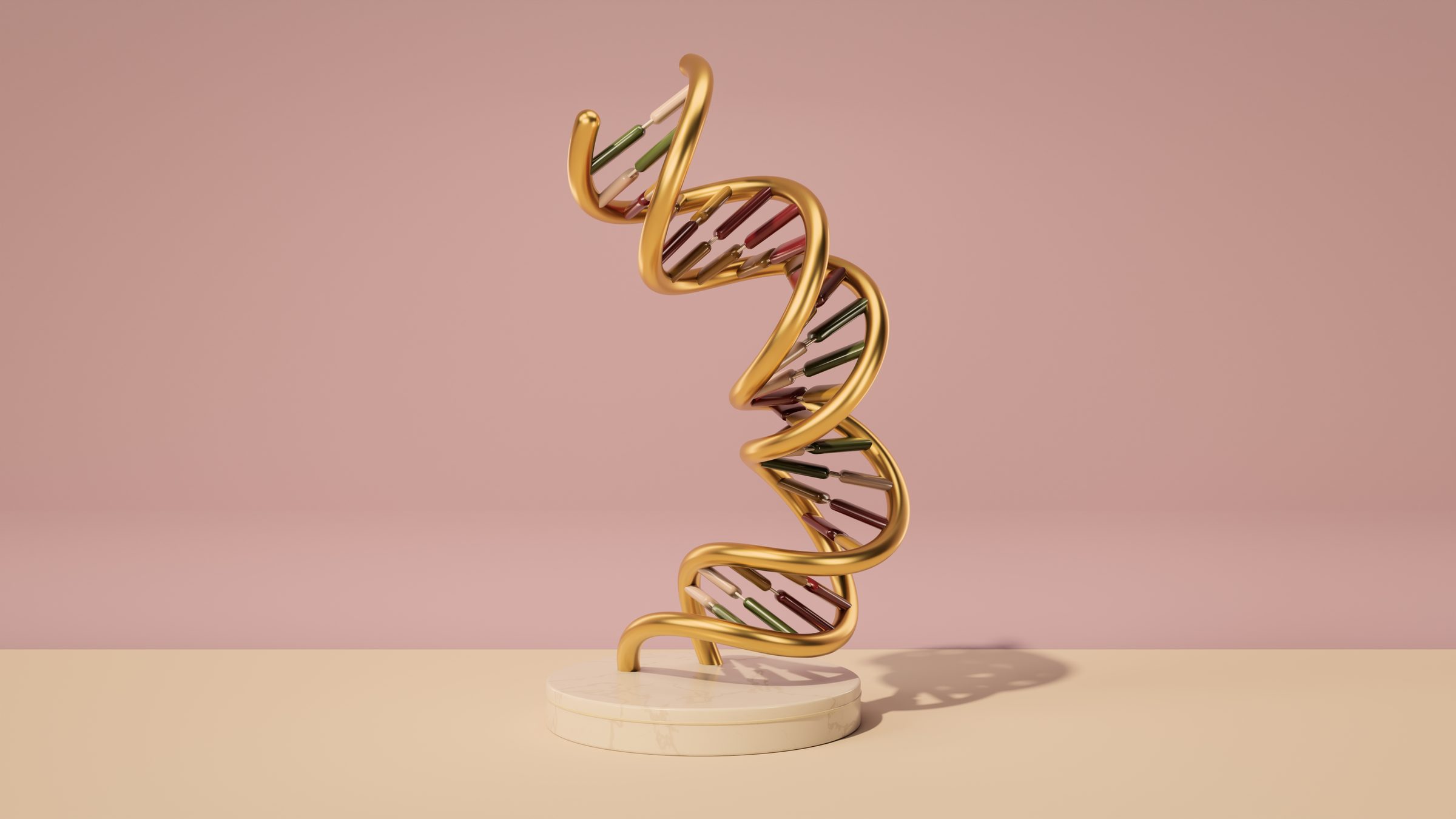
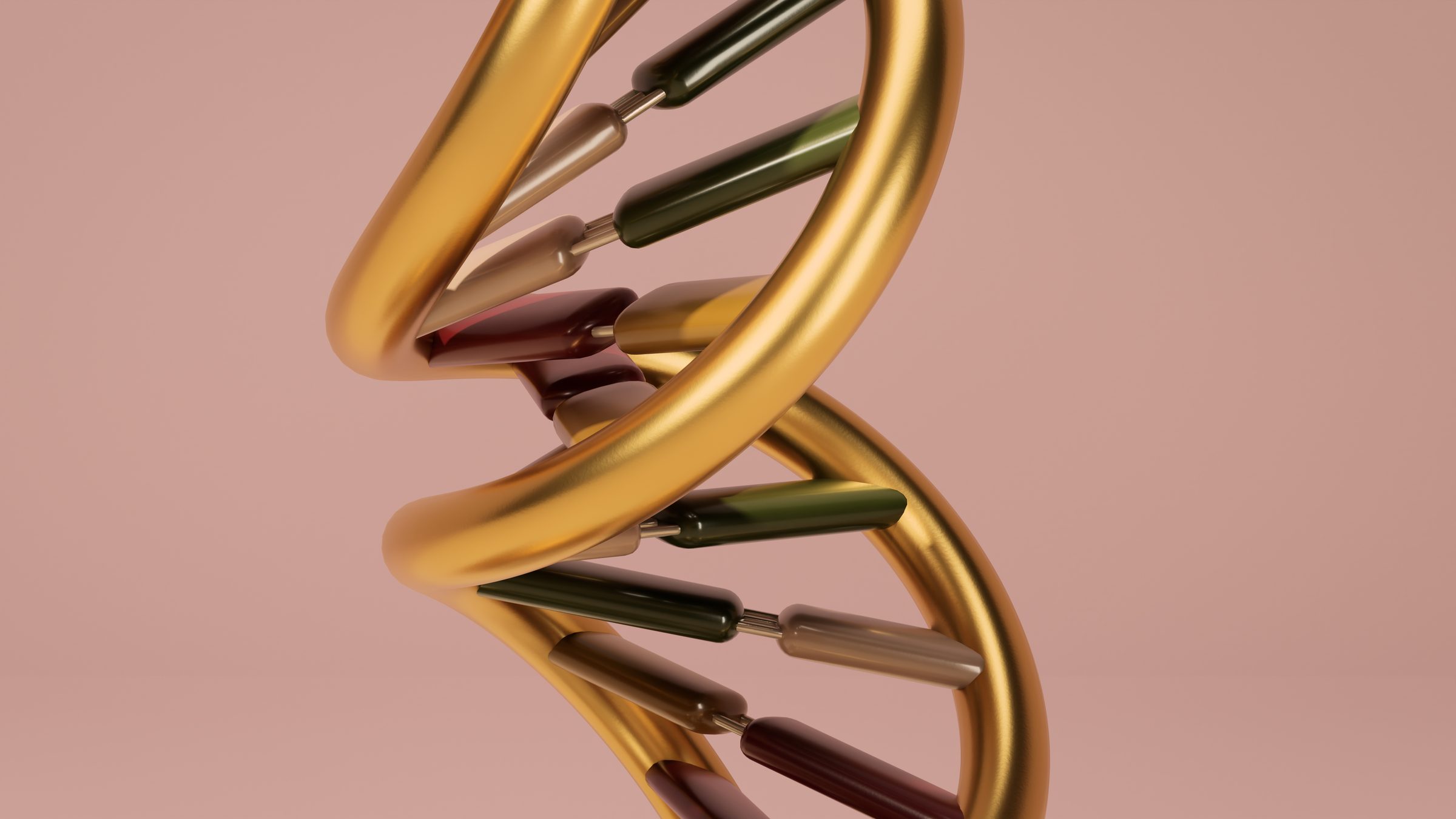
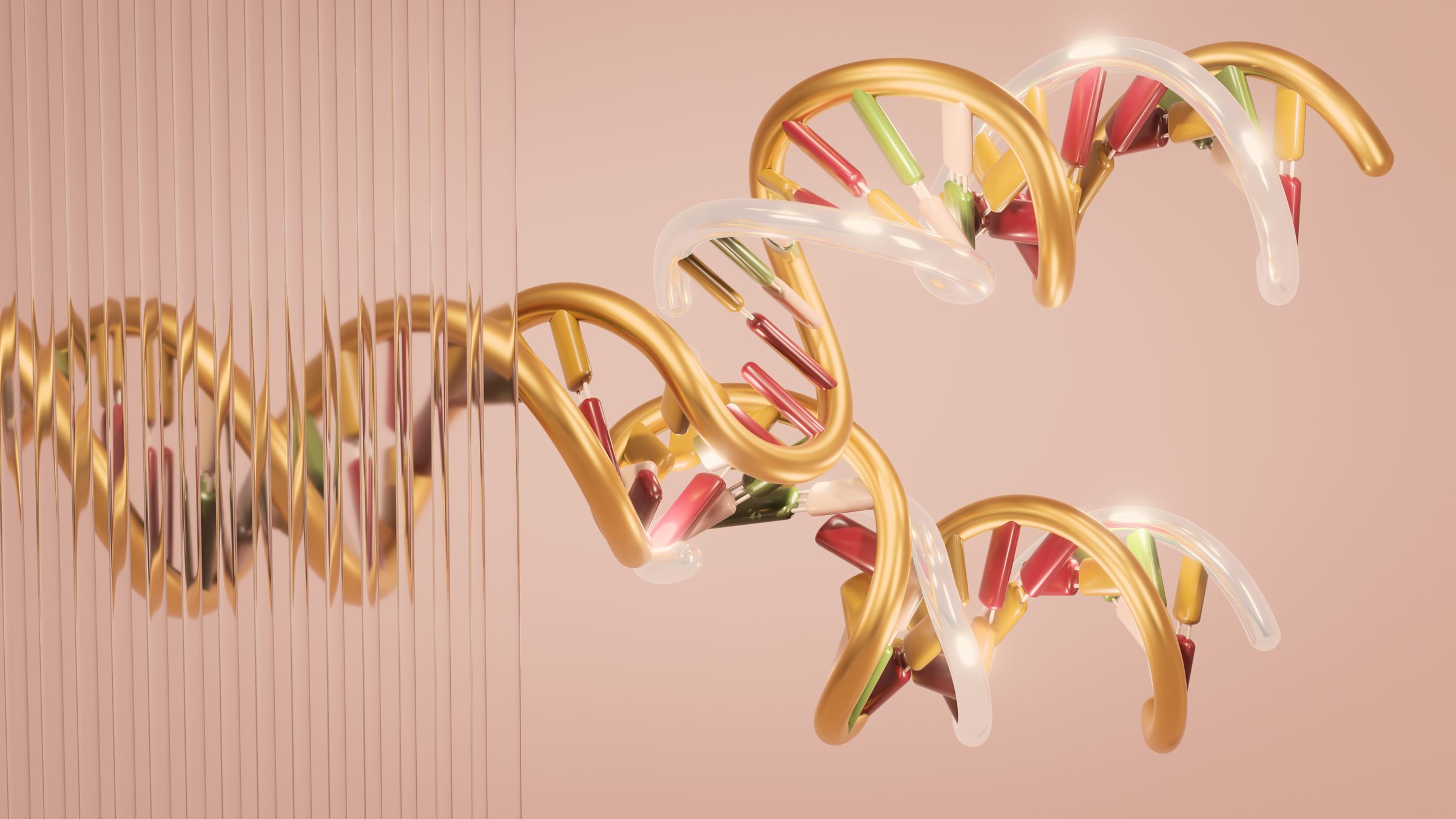
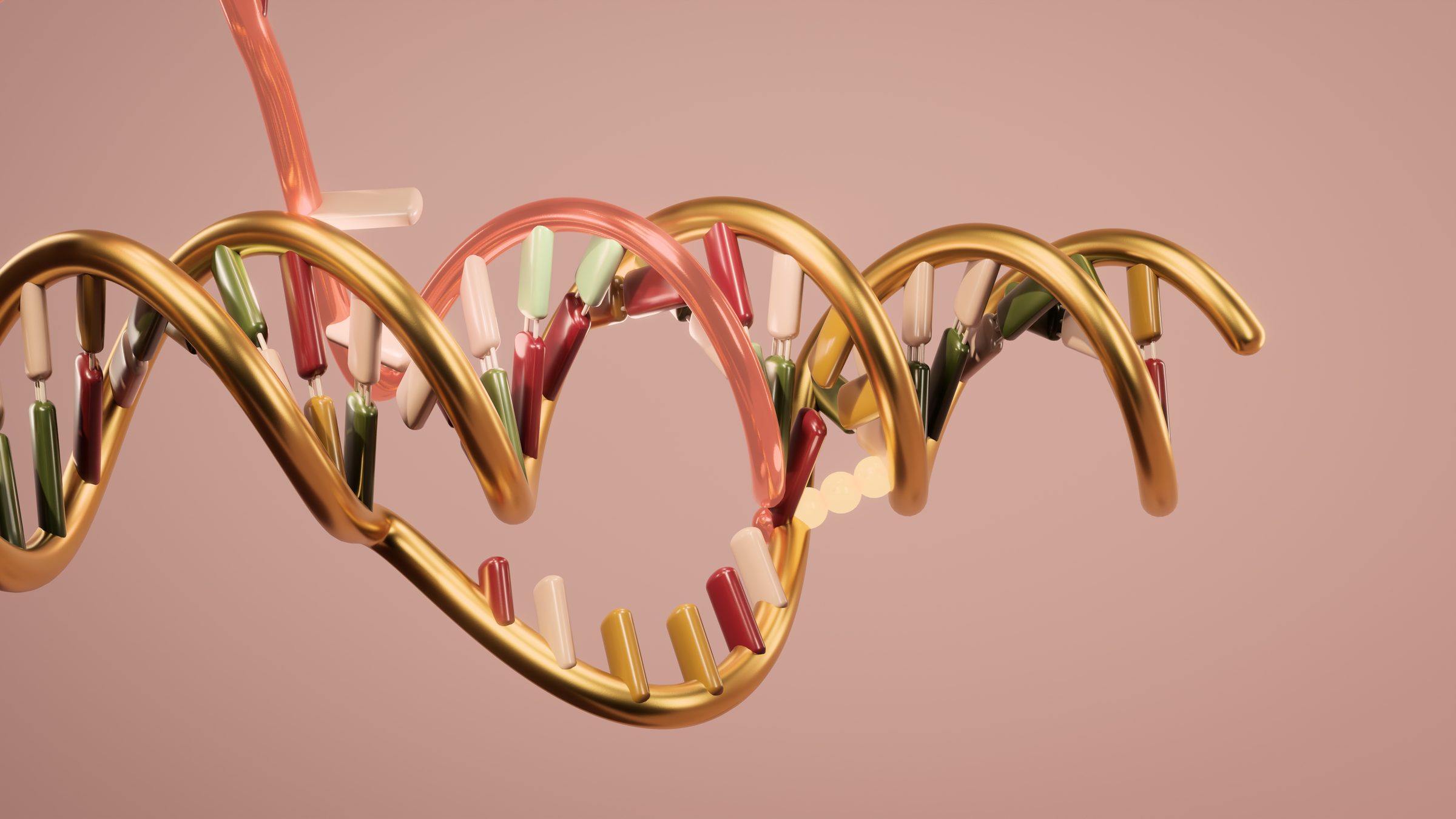
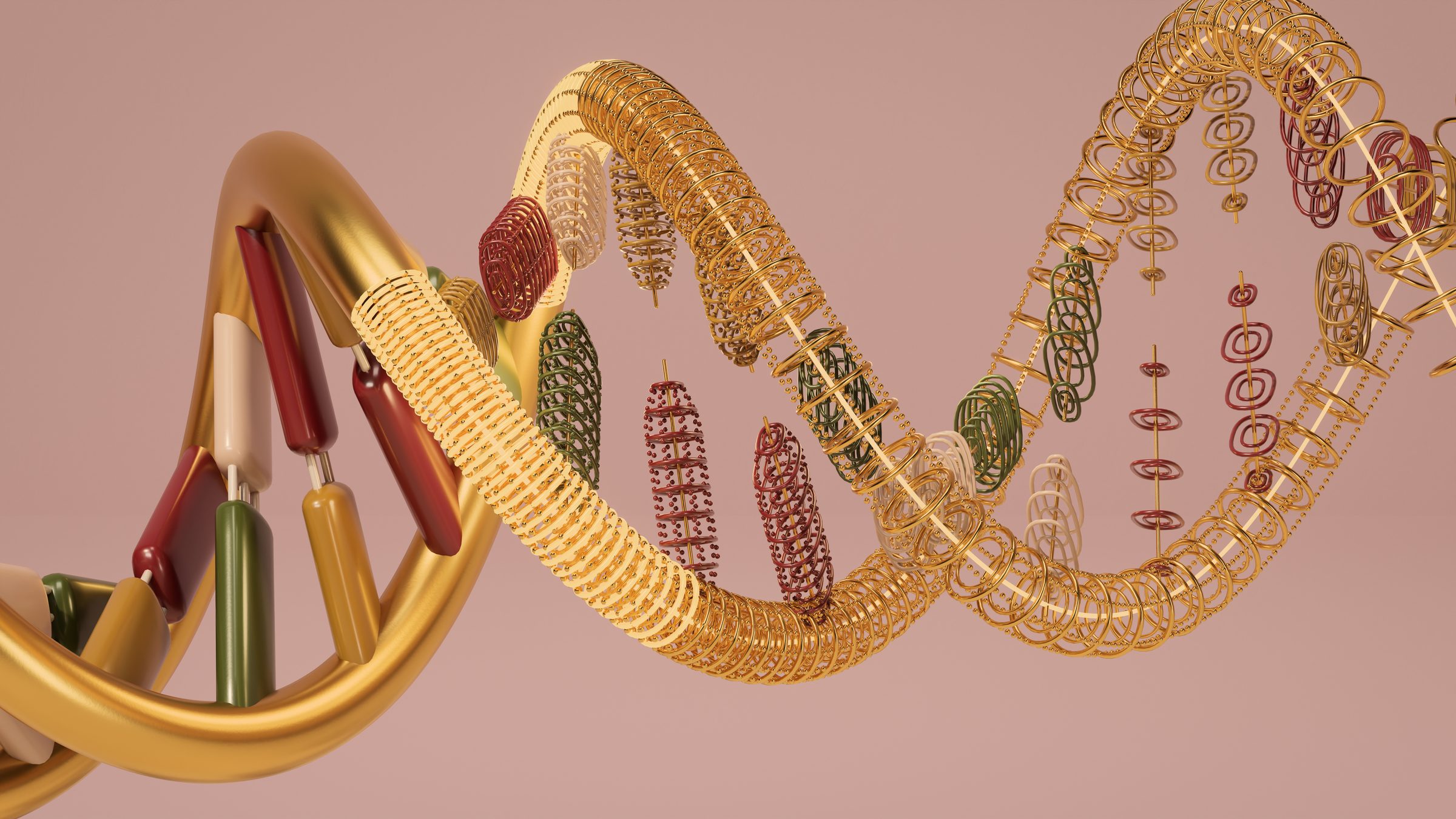
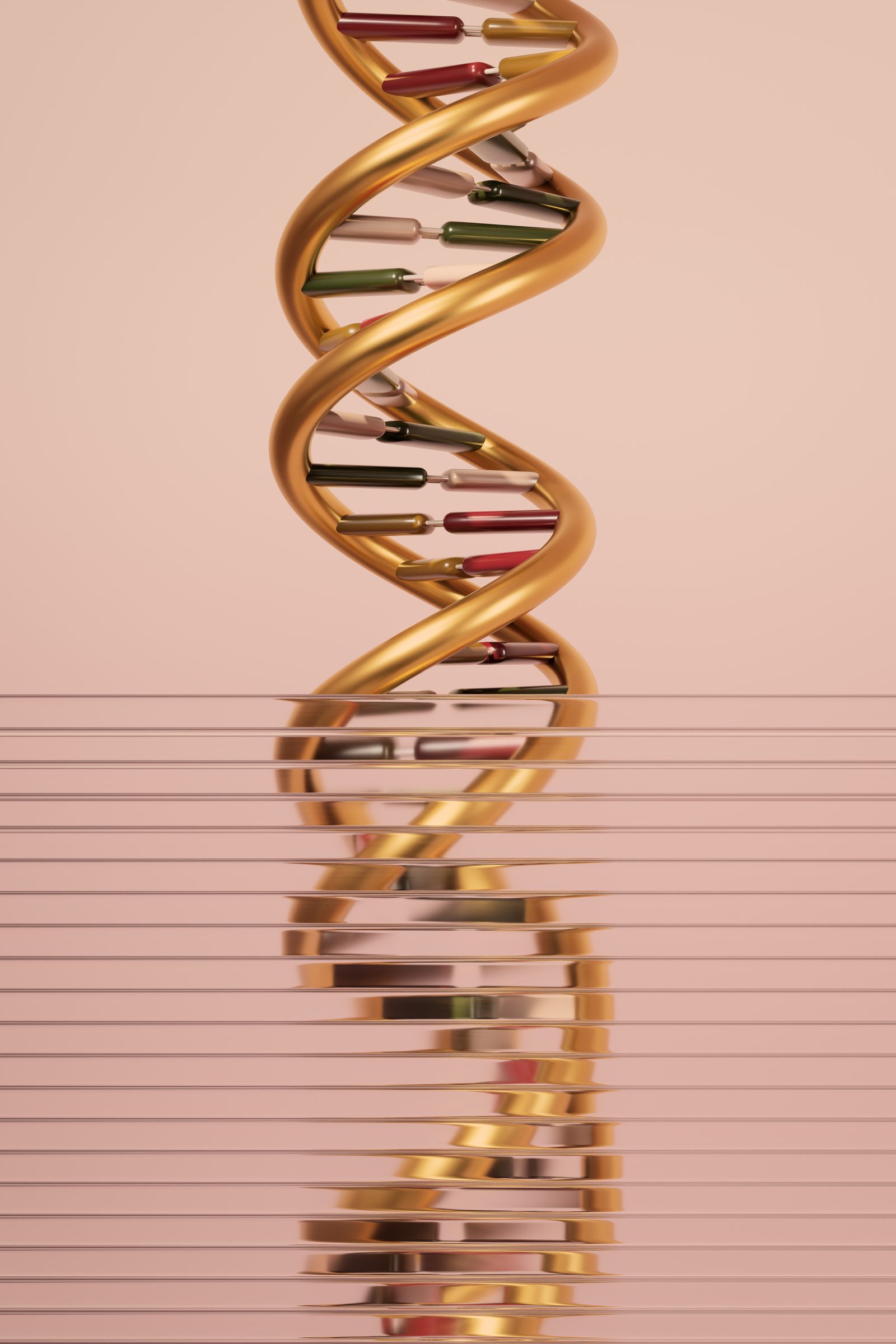
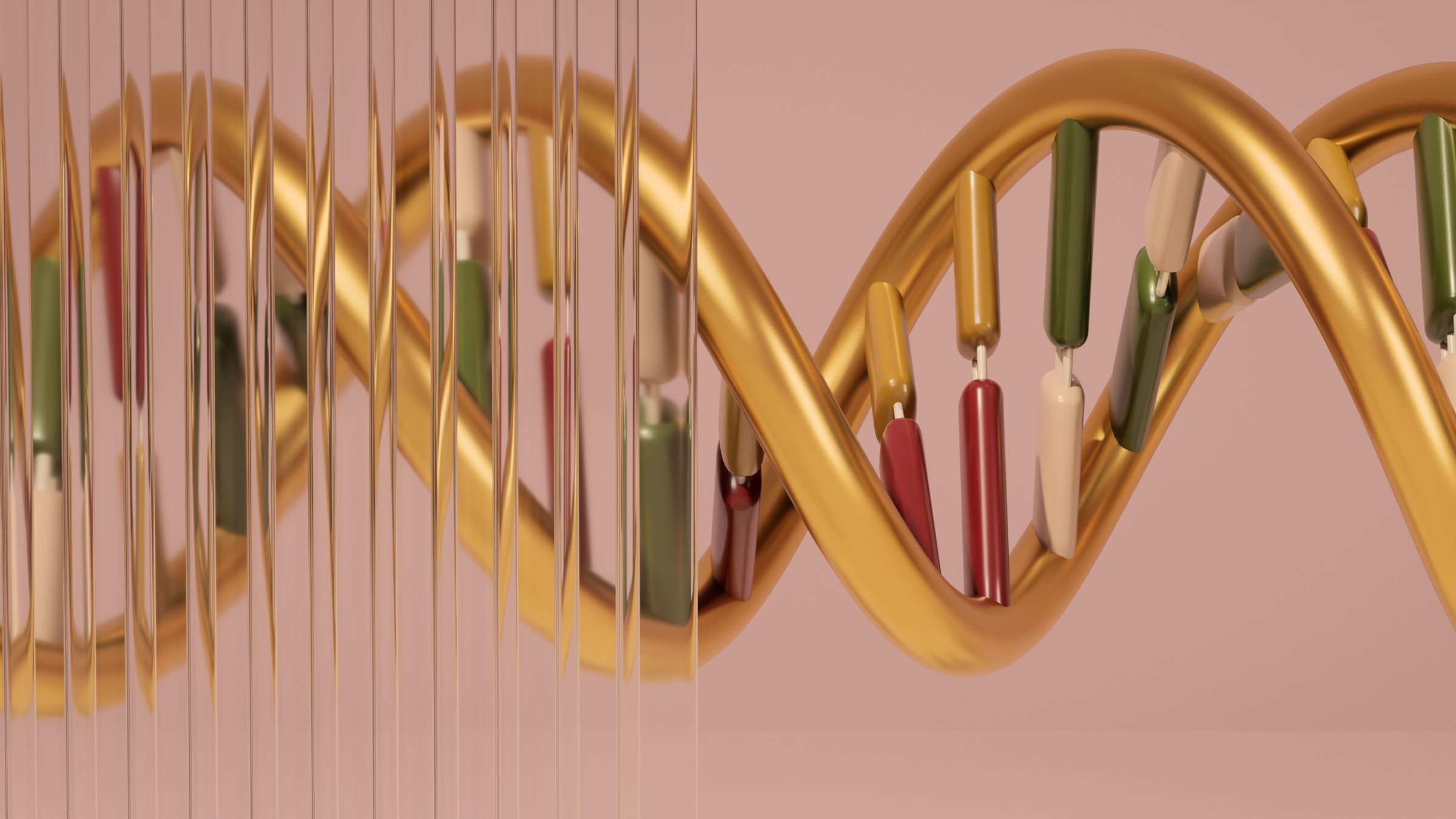
Two strands wound around each other, held together by base pairs: A always with T, C always with G. That rule is what lets DNA be copied.
Base pairs A–T · C–GRight-handed helix
Series 04 · Living Science · 2026 · Seven films and thirty-one stills
The molecule of life, cast in gold, glazed ceramic and light.
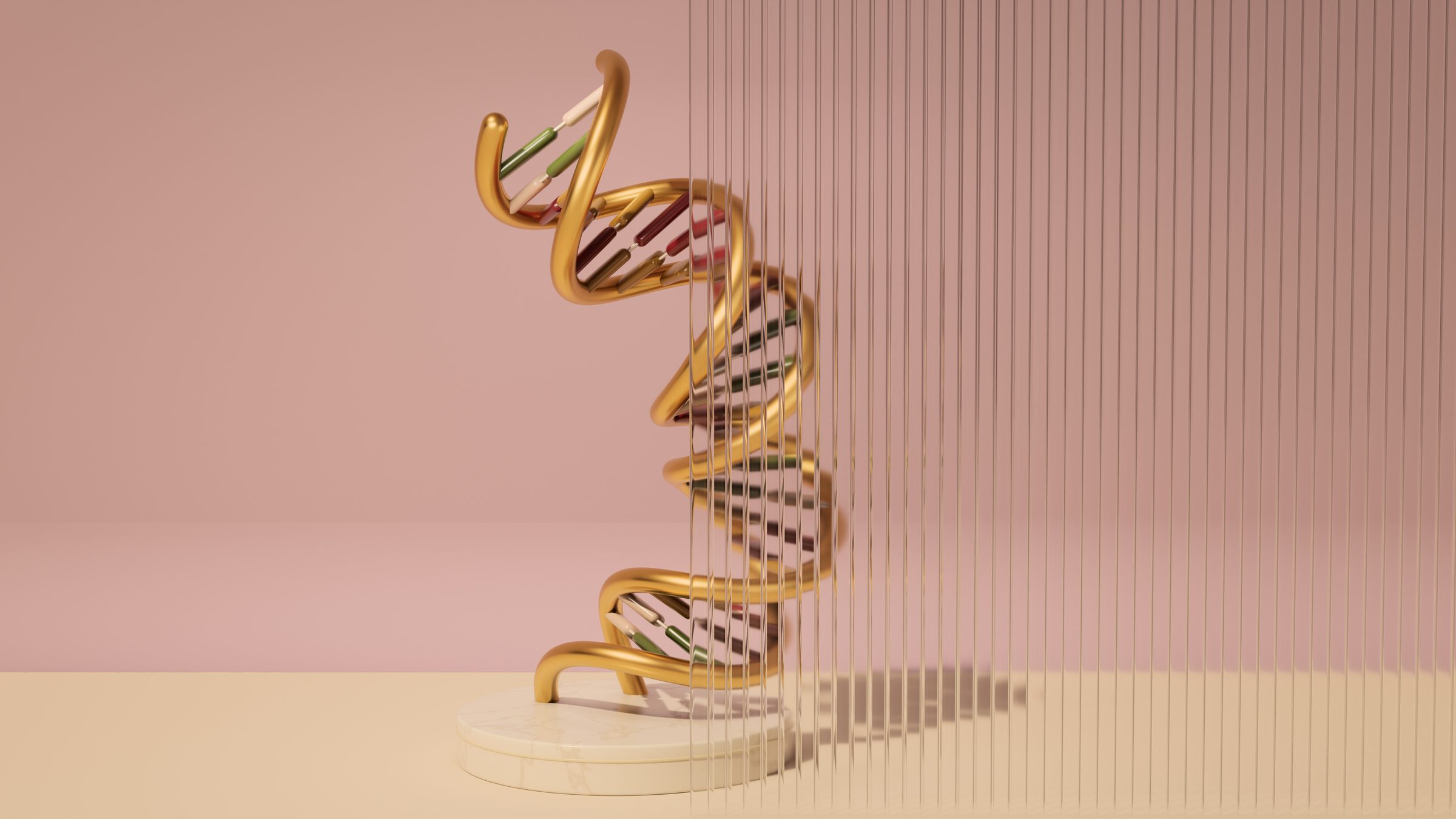
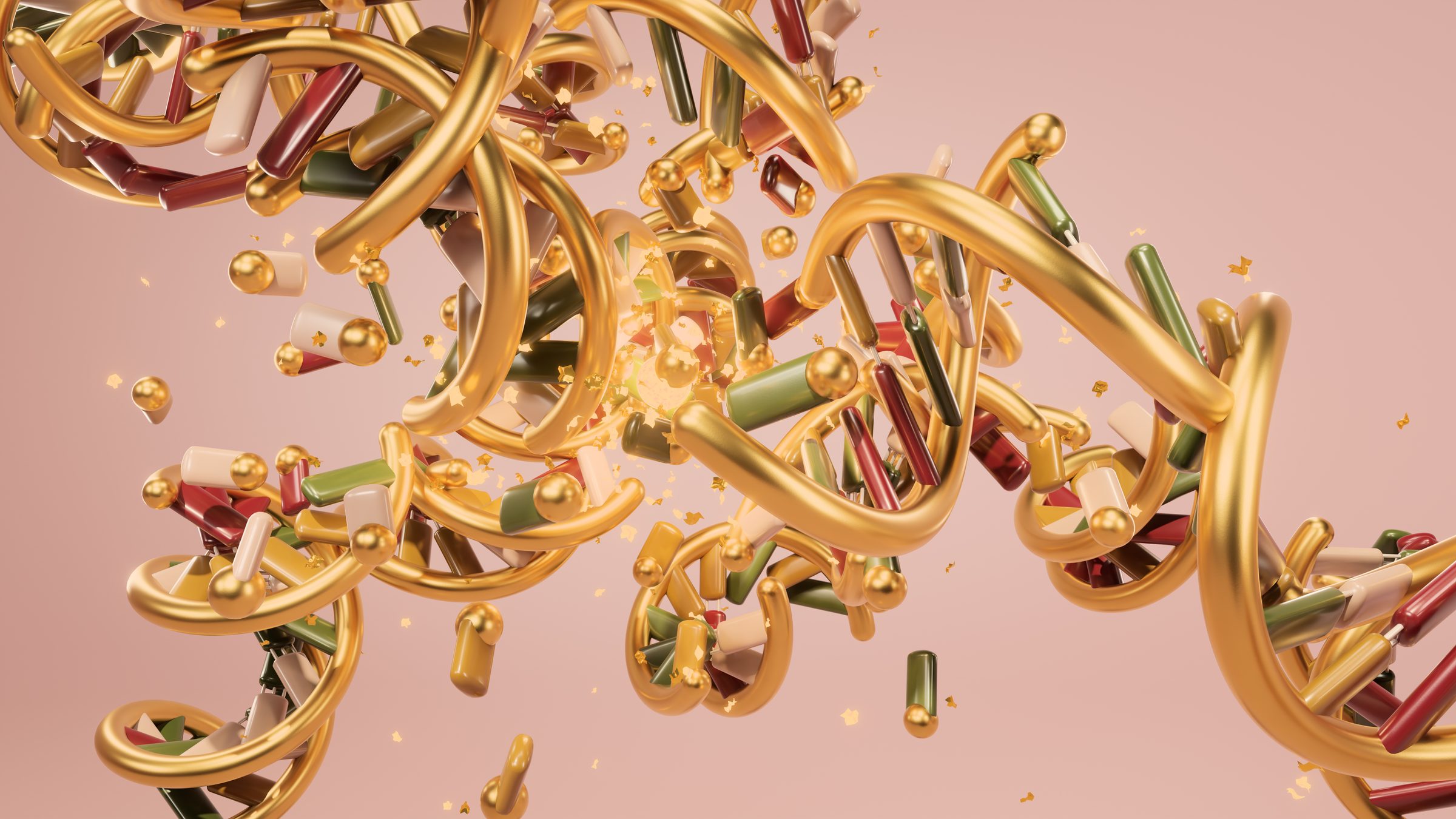
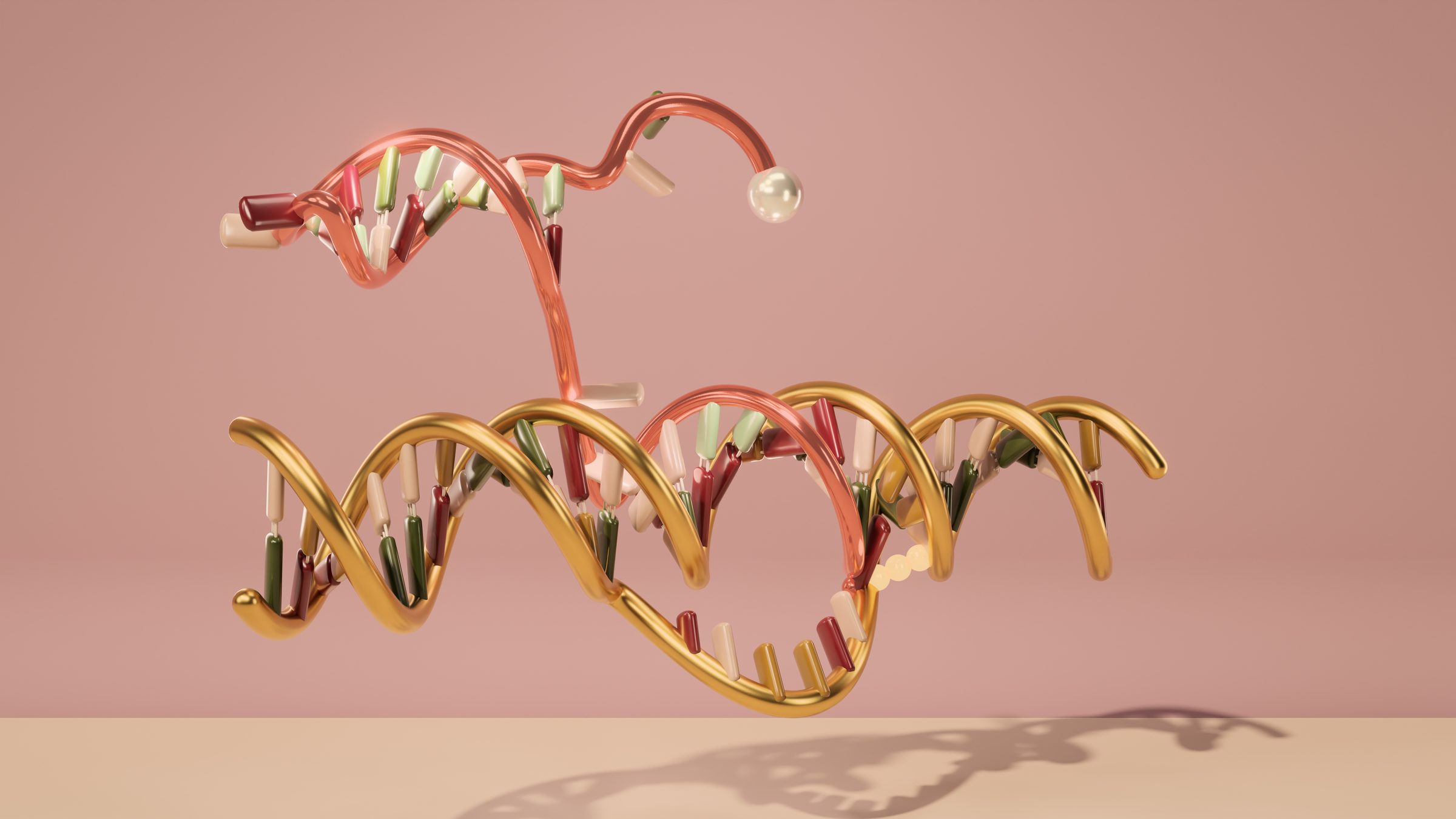
With Golden Code I wanted images that work for science, for teaching and as art at the same time. Each one is built on a real process of DNA: how it copies itself, repairs itself, reads its genes and packs itself away.
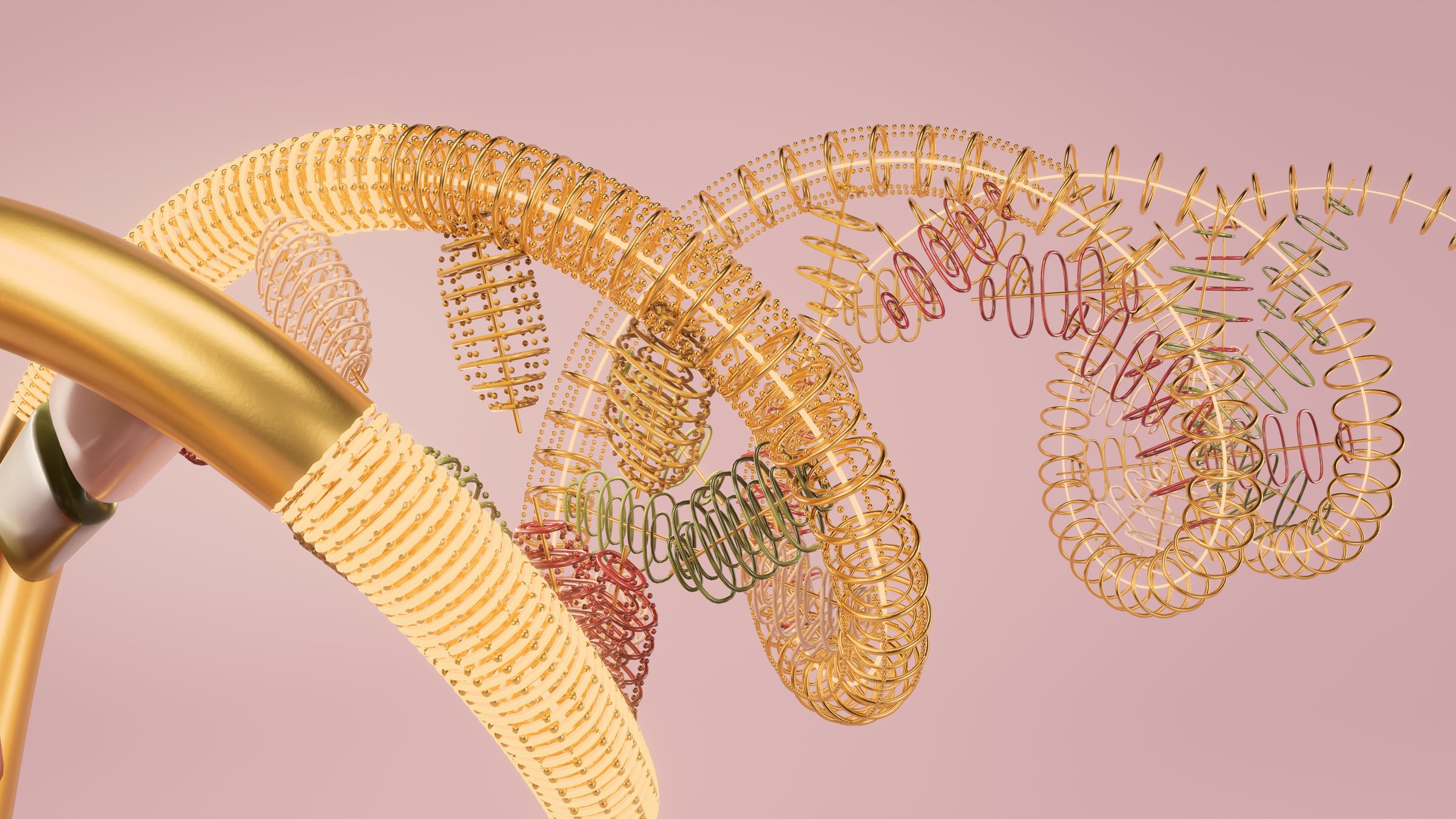
I made the double helix a gold sculpture and the single strands ribbons that flow, because that’s how they behave: the double helix is stiff and stable, while a single strand is flexible and keeps changing shape.
Two strands wound around each other, held together by base pairs: A always with T, C always with G. That rule is what lets DNA be copied.
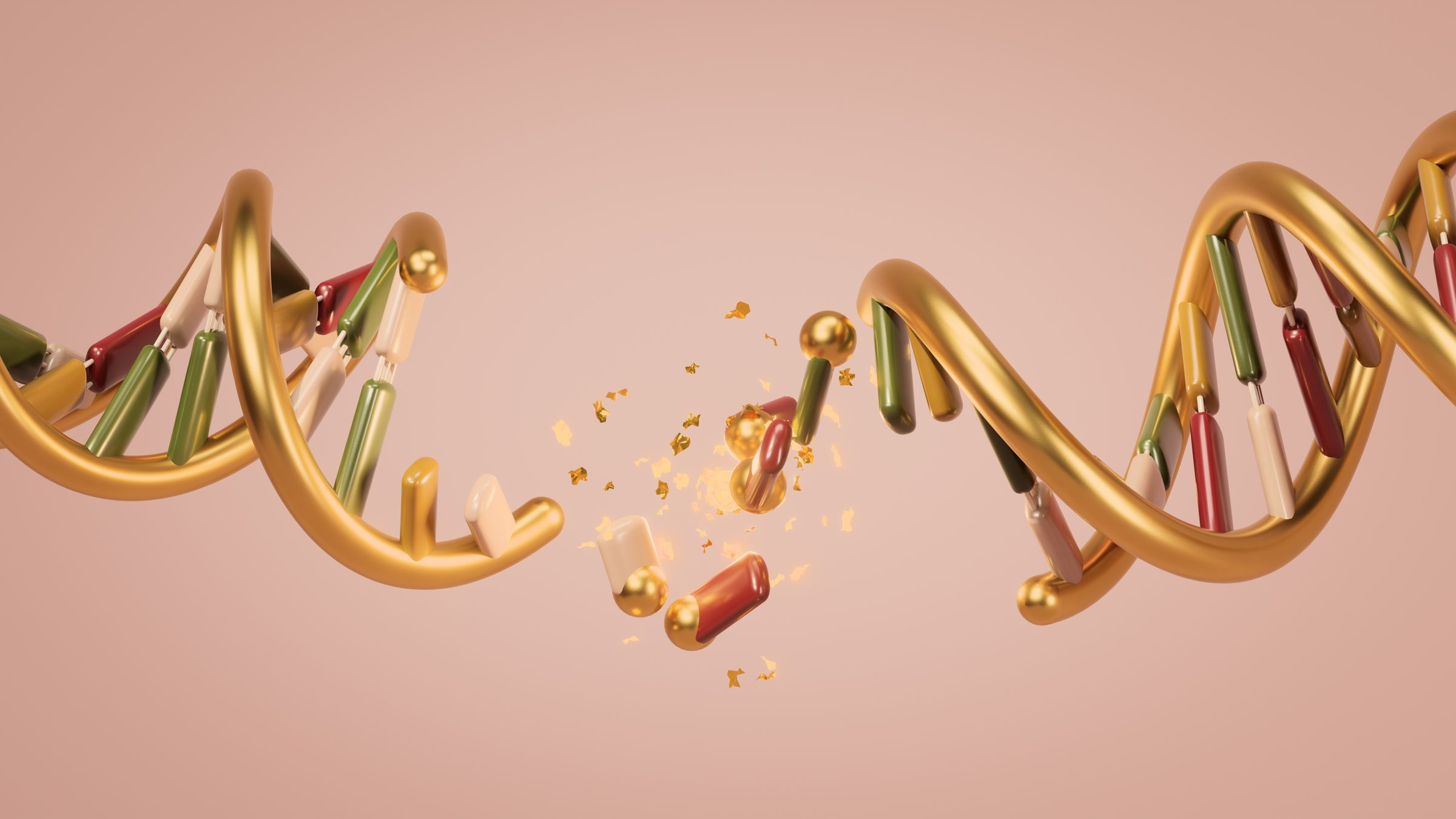
Cells repair damaged DNA all the time. I borrowed kintsugi, the Japanese art of mending ceramics with gold, so the repair becomes visible.
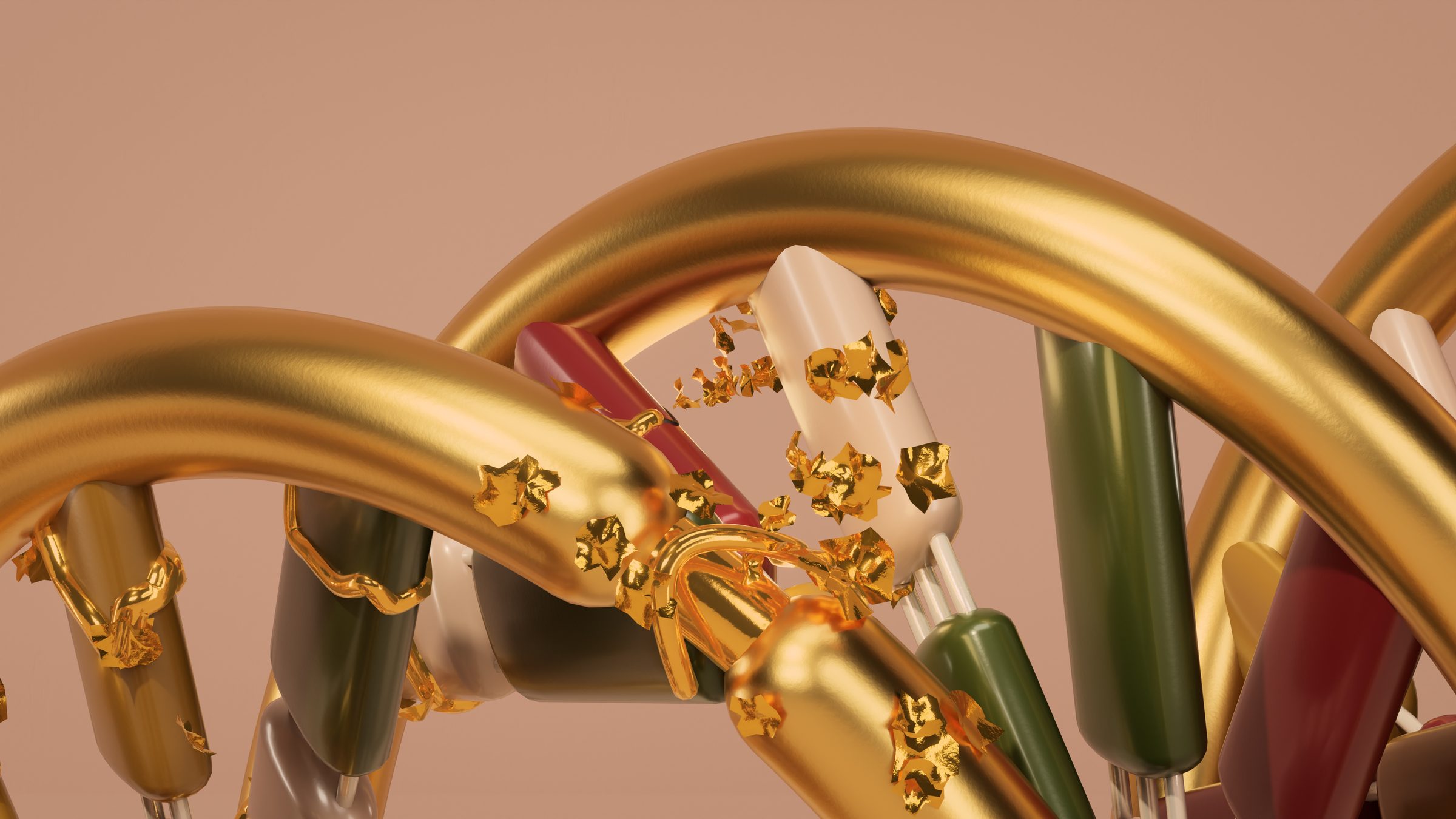
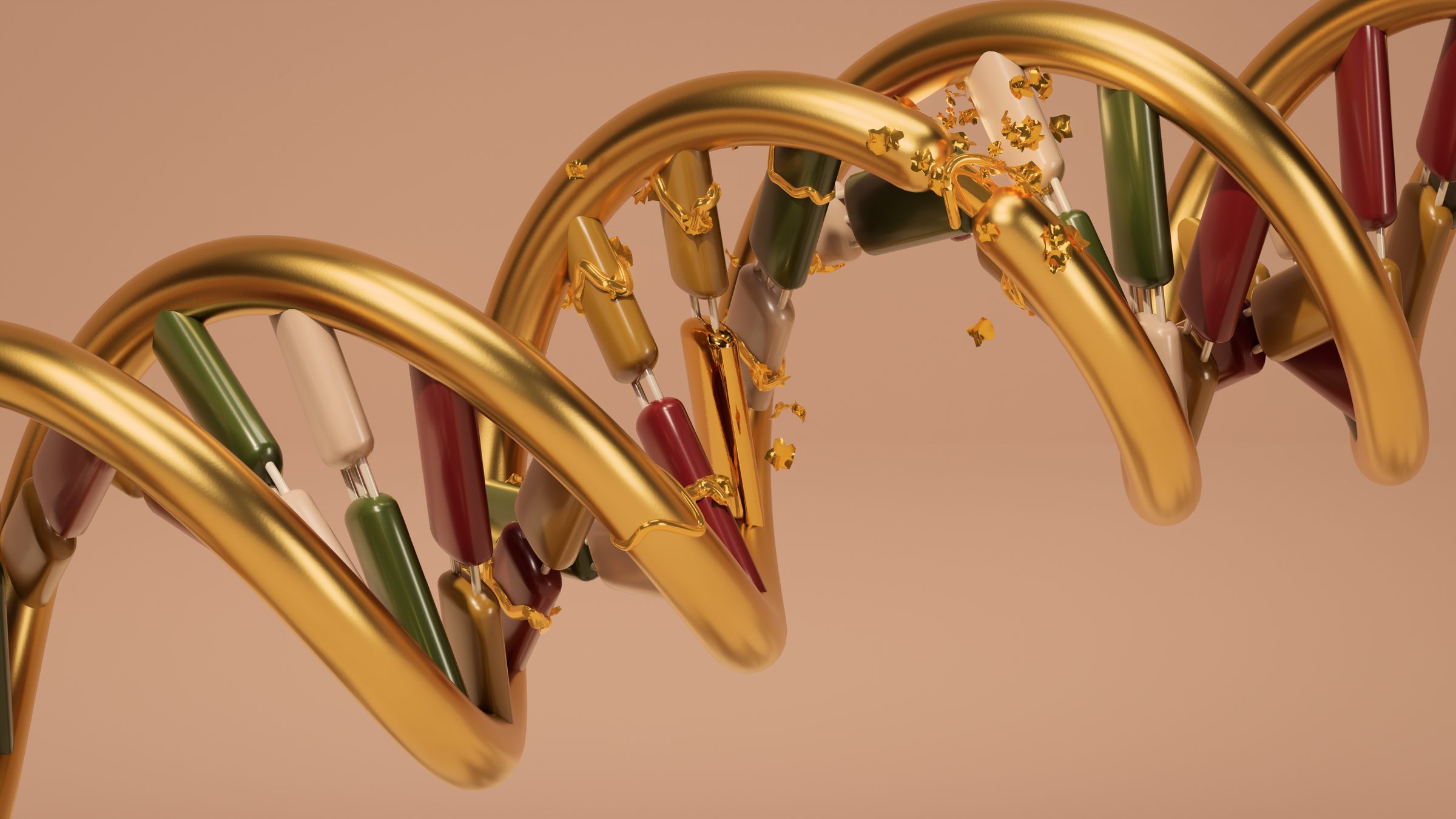
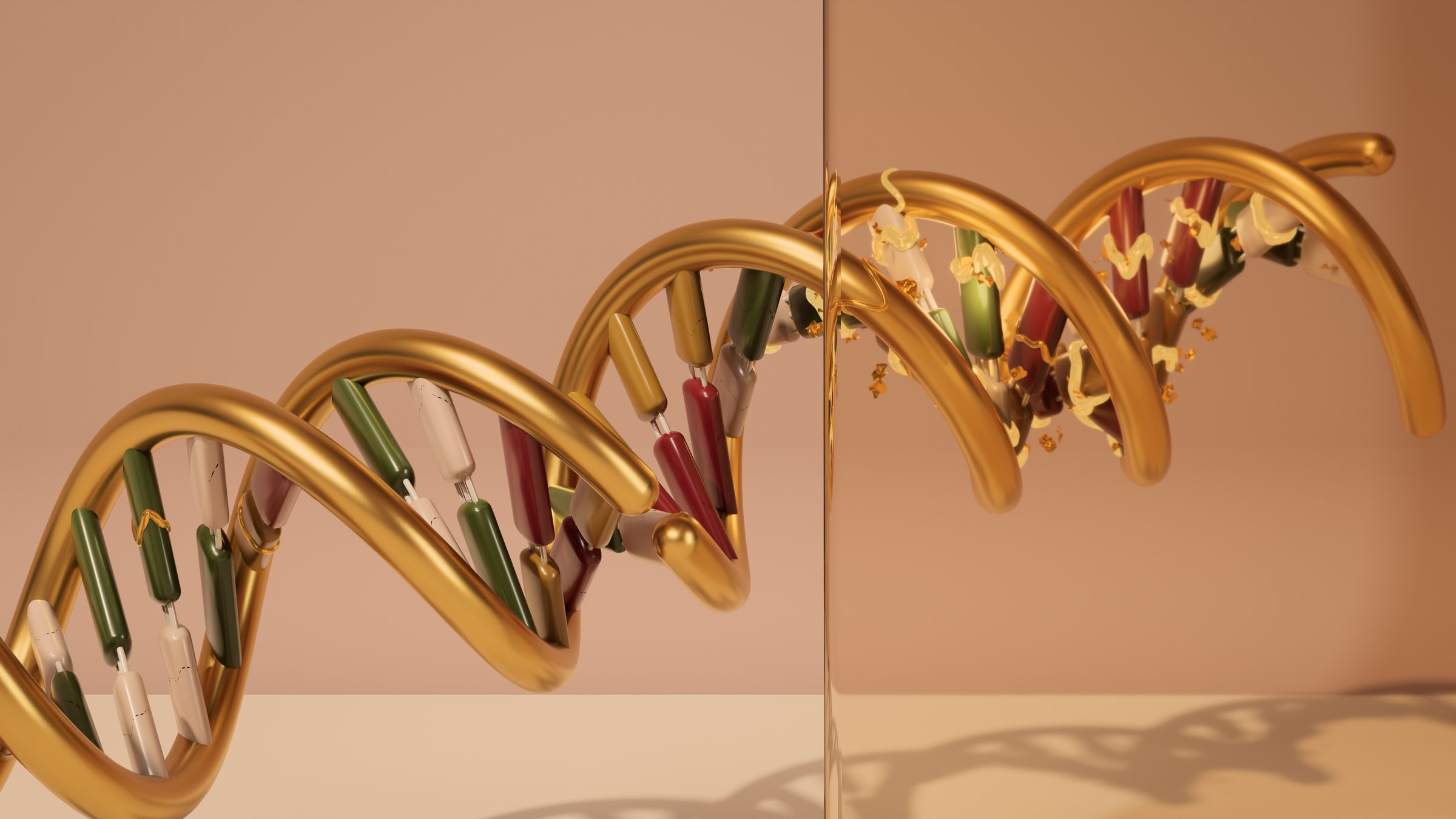
A double-strand break is the most dangerous damage DNA can suffer. The broken ends can be left with short single-stranded tails, called sticky ends, which are complementary and can find each other again.
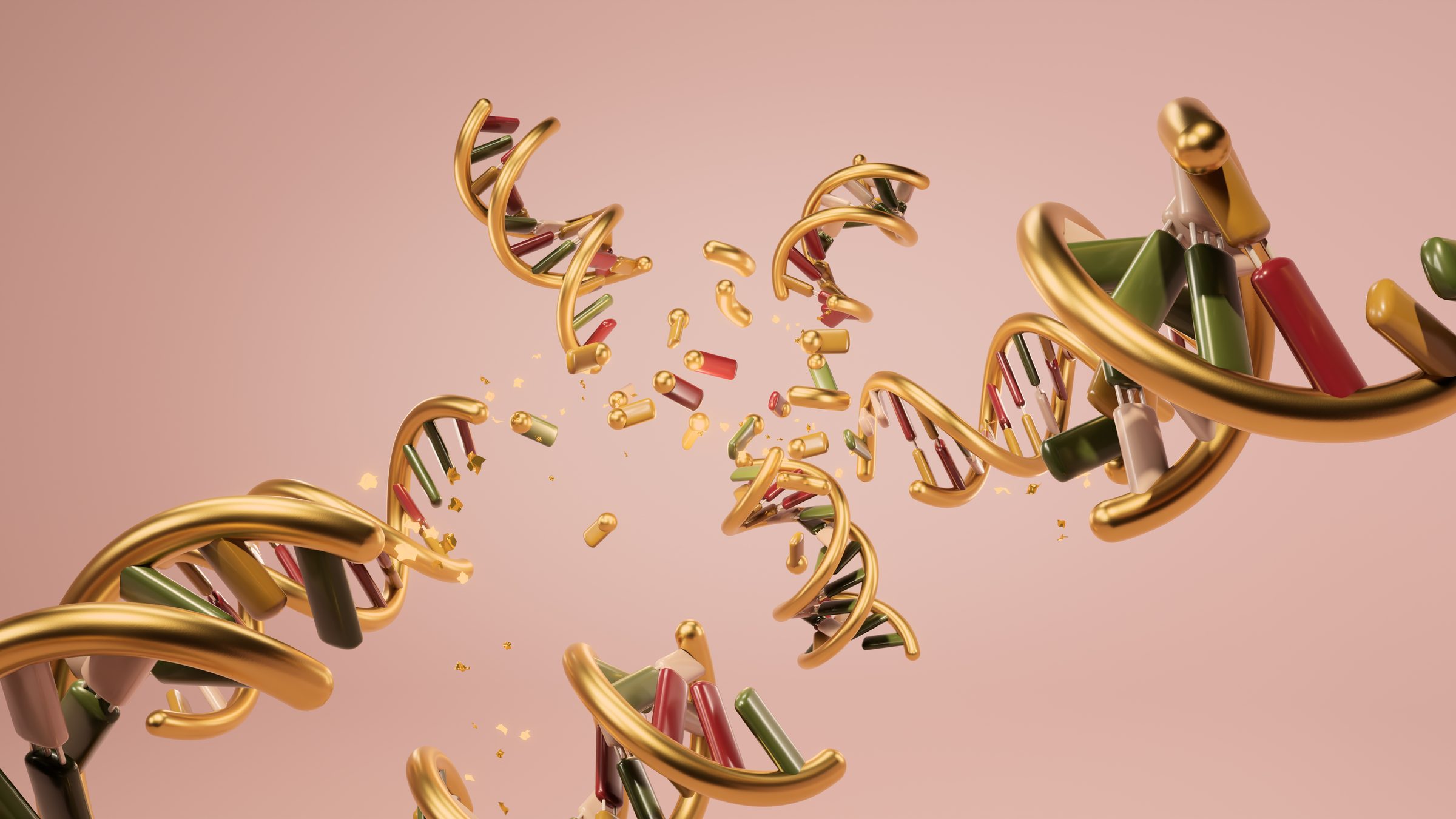
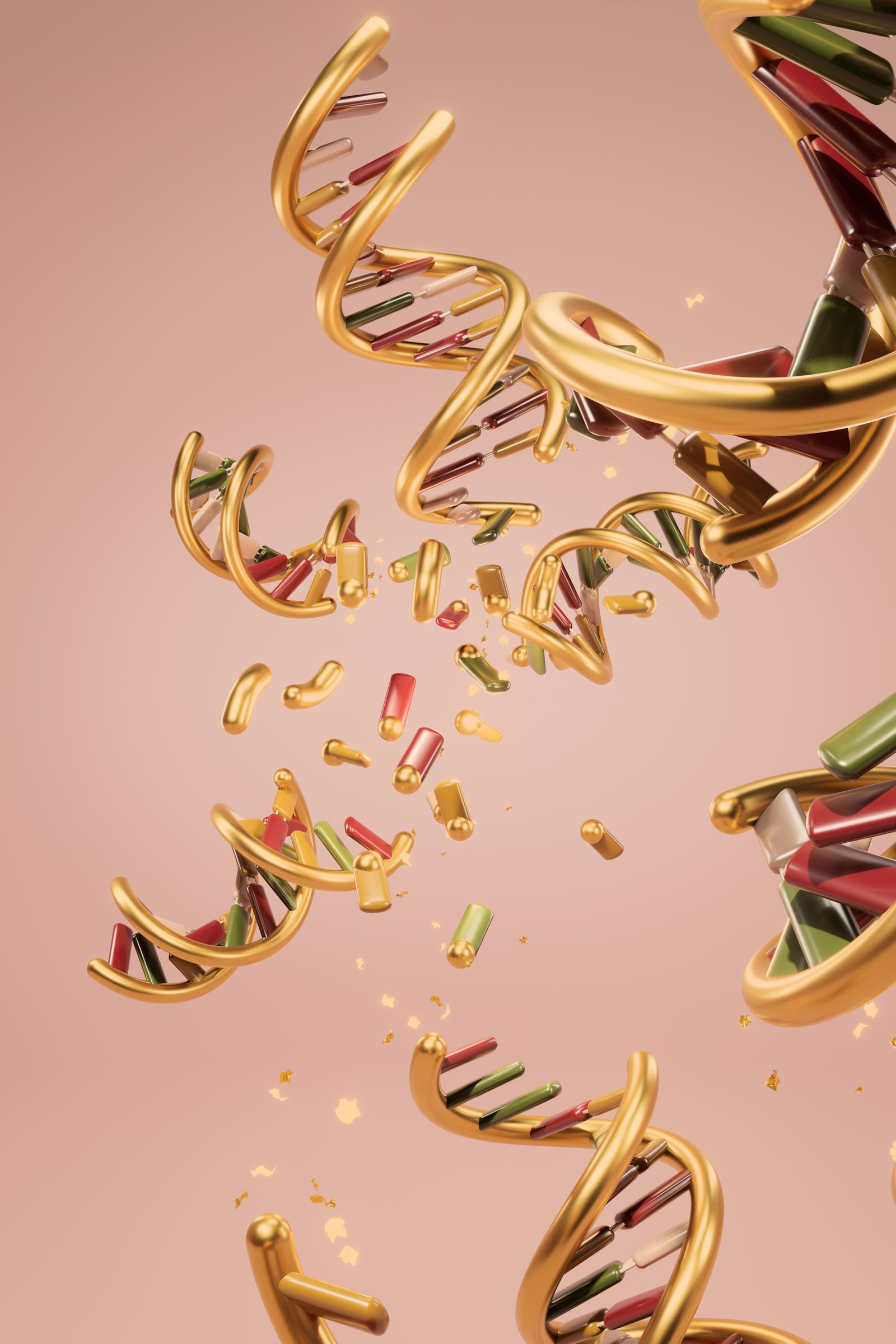
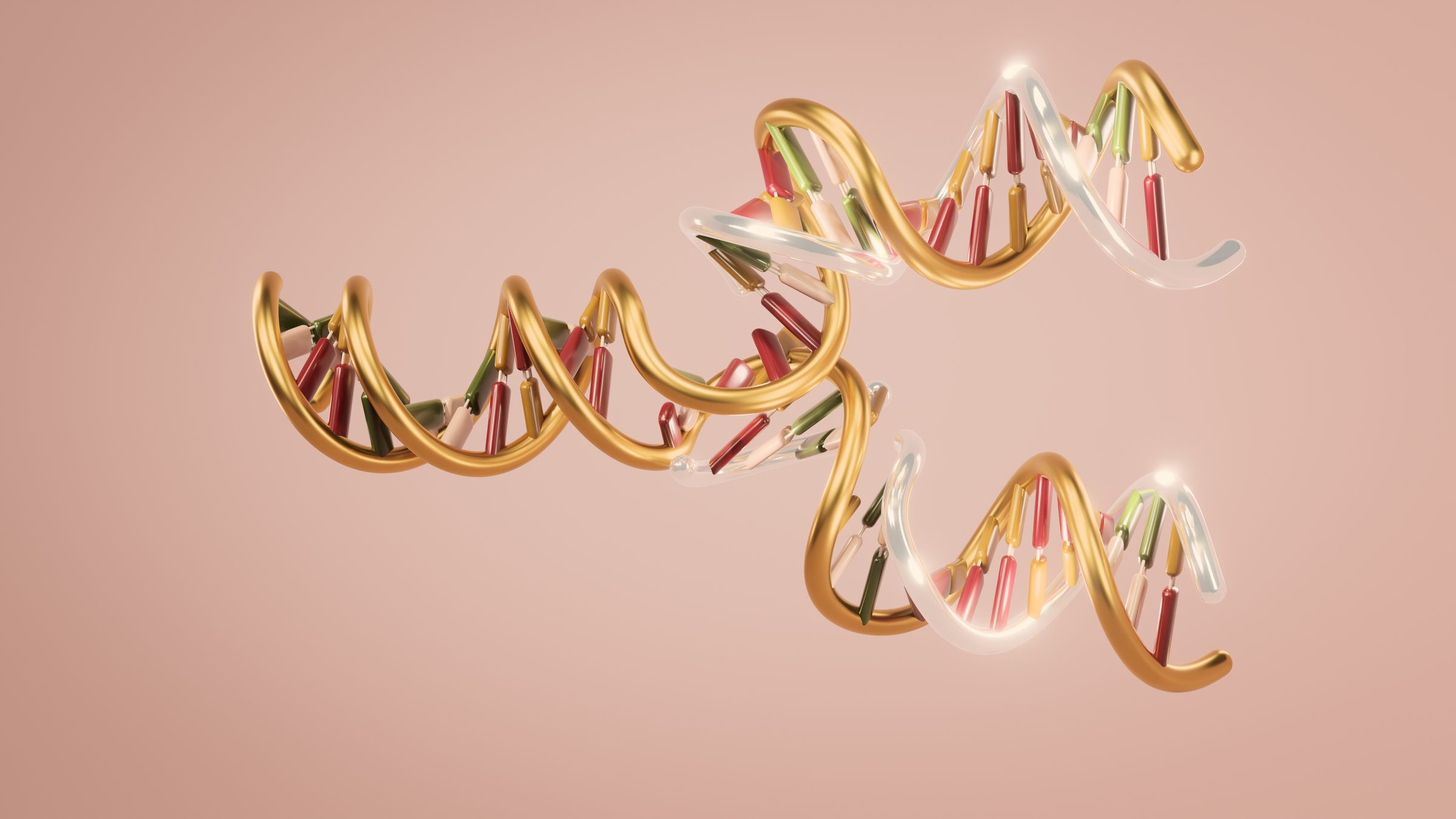
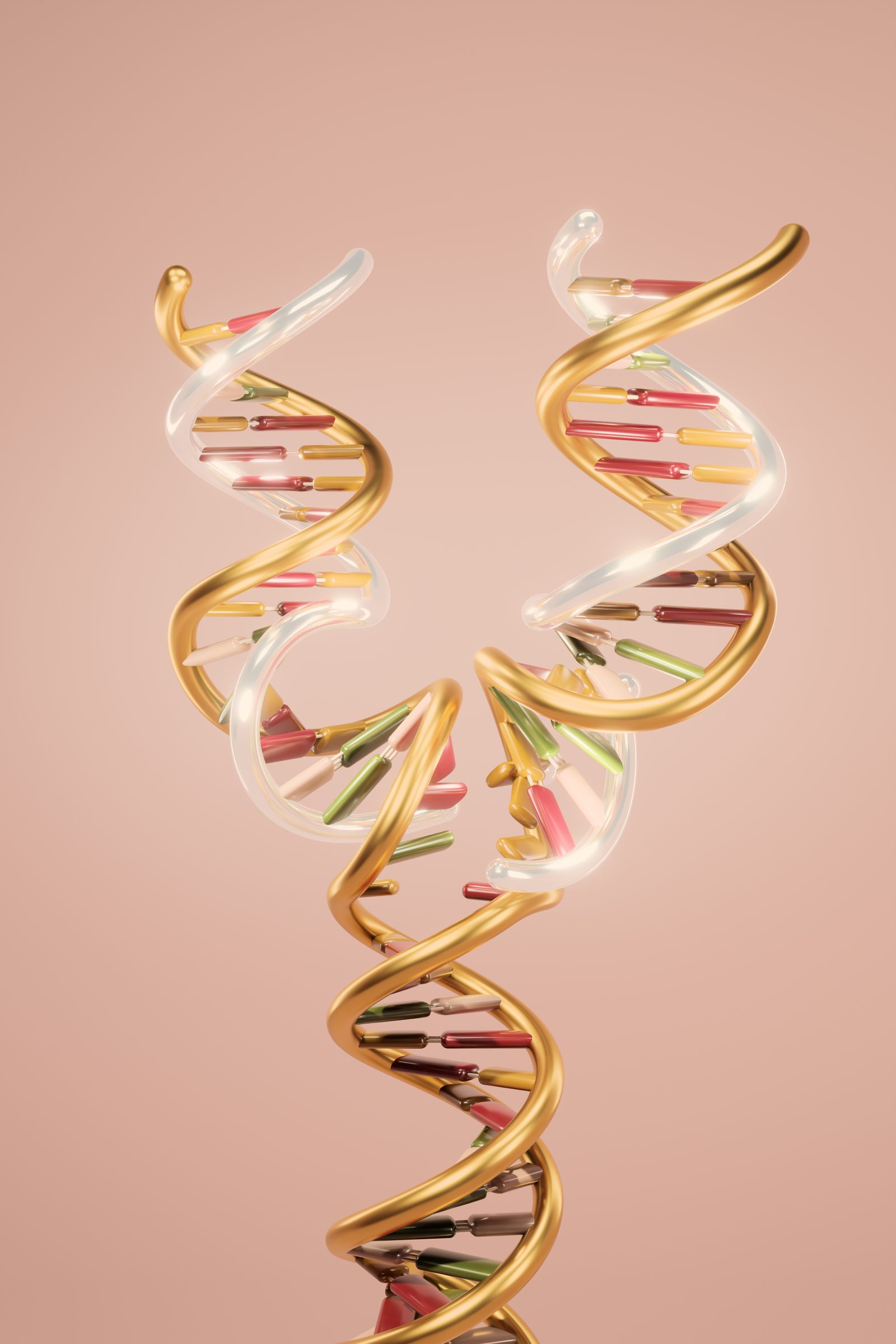
Before a cell divides, it copies its DNA. One new strand grows continuously; the other can only be built backwards, in short pieces called Okazaki fragments.
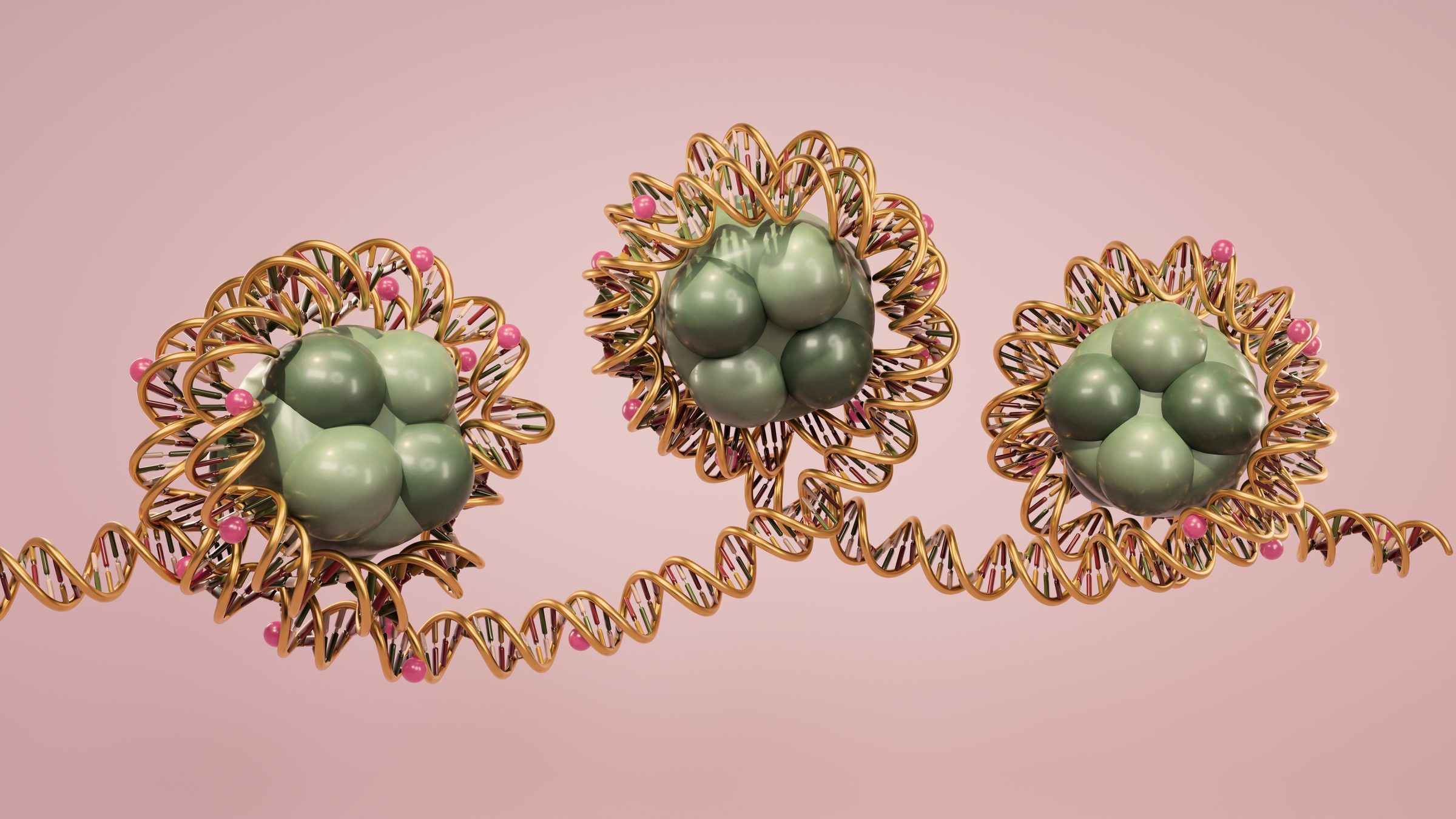
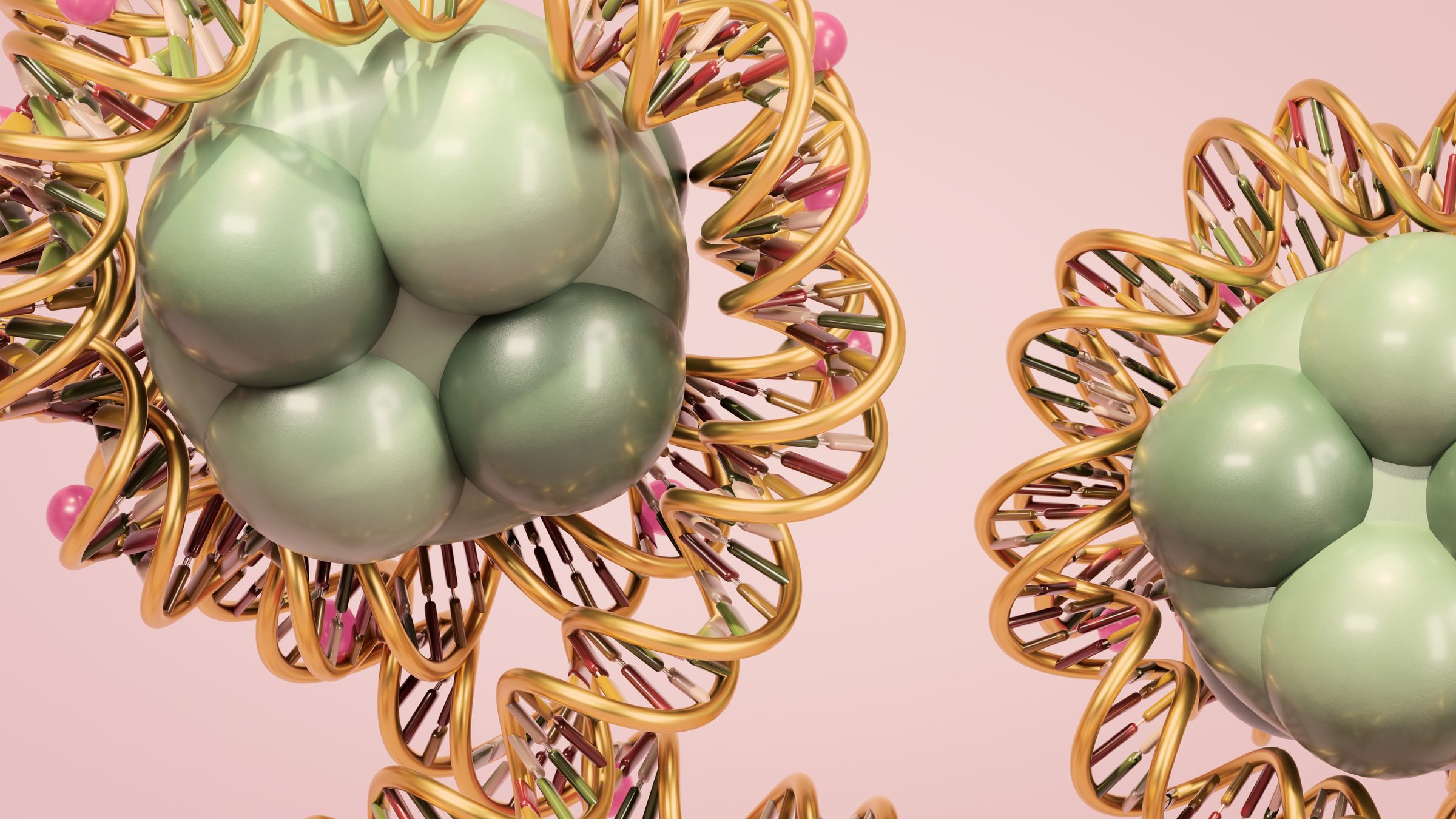
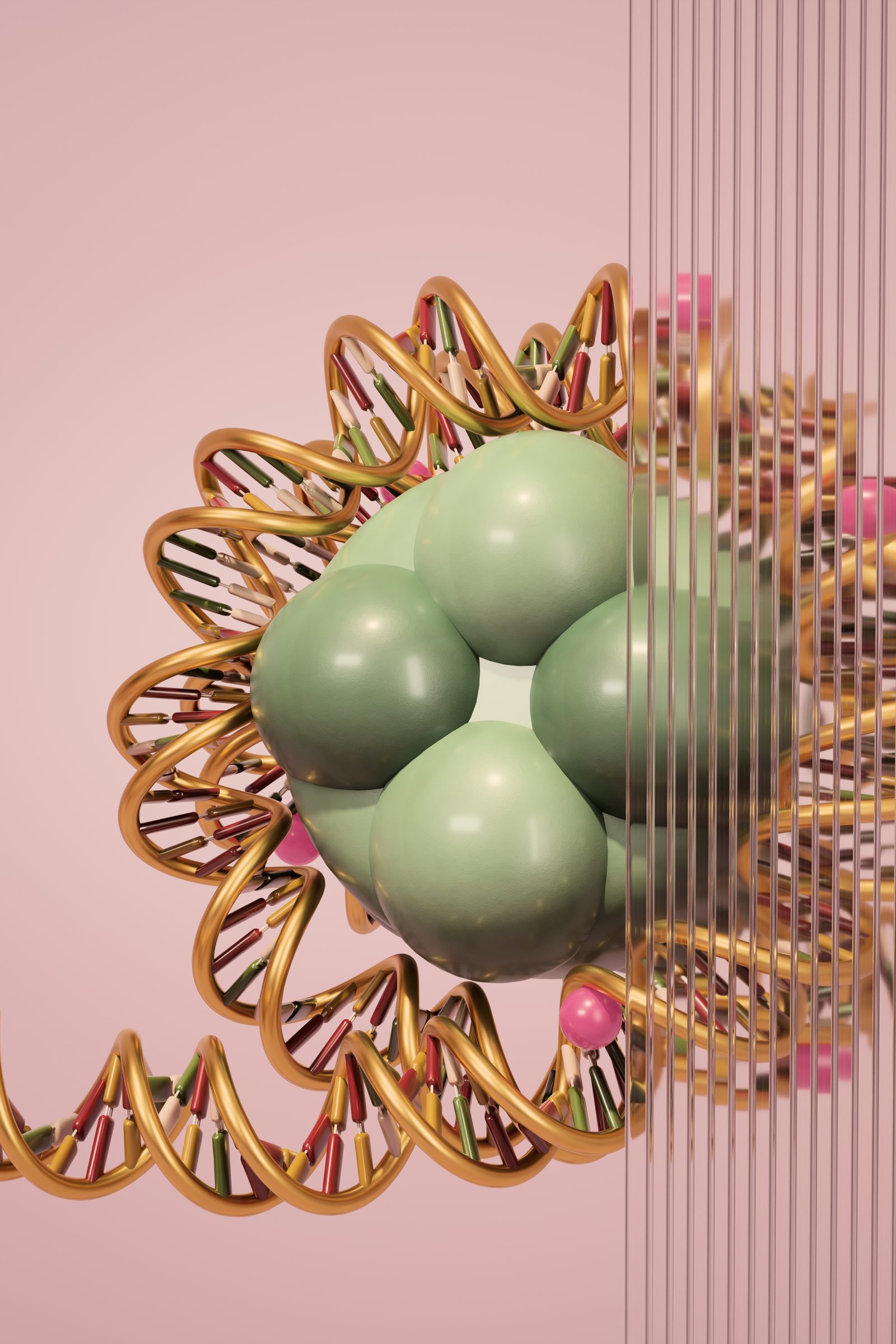
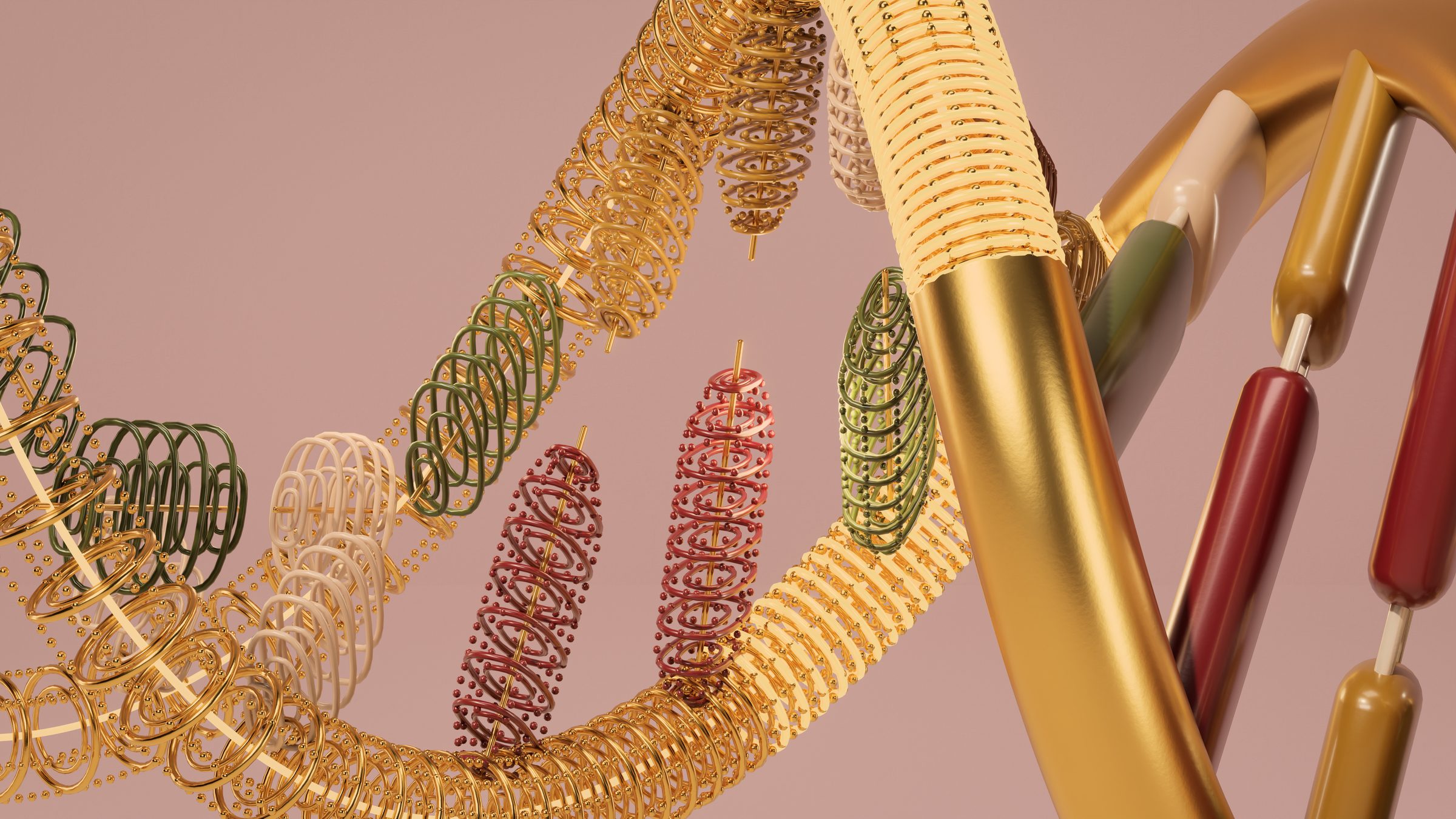
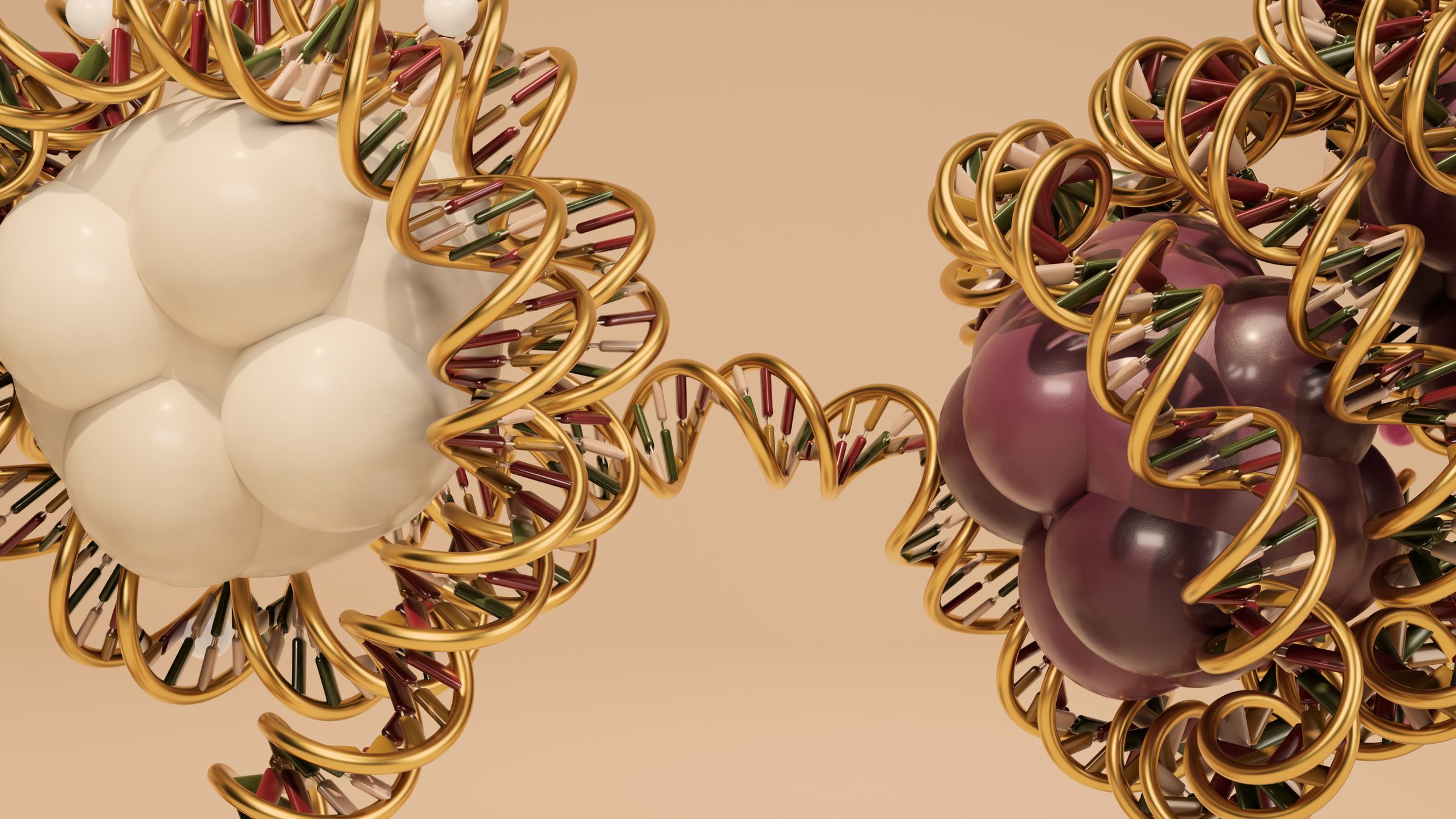
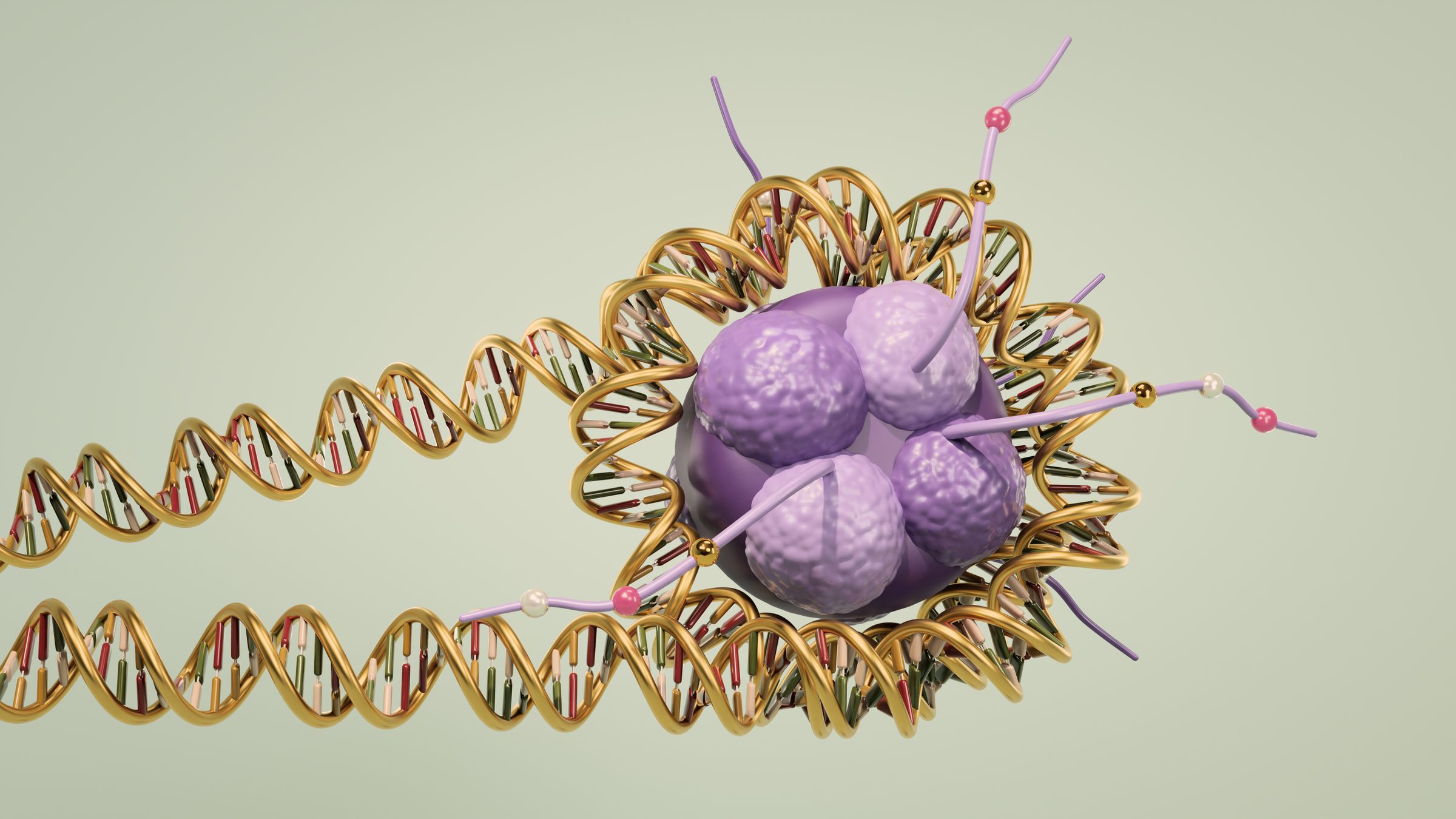
DNA wraps around proteins called histones like thread on spools. Each spool is a nucleosome, and how tightly the thread is wound decides which genes can be read.
A gene is read and copied into RNA, a single strand that carries the message to the rest of the cell. RNA folds onto itself into real shapes, like the hairpin called a stem-loop.
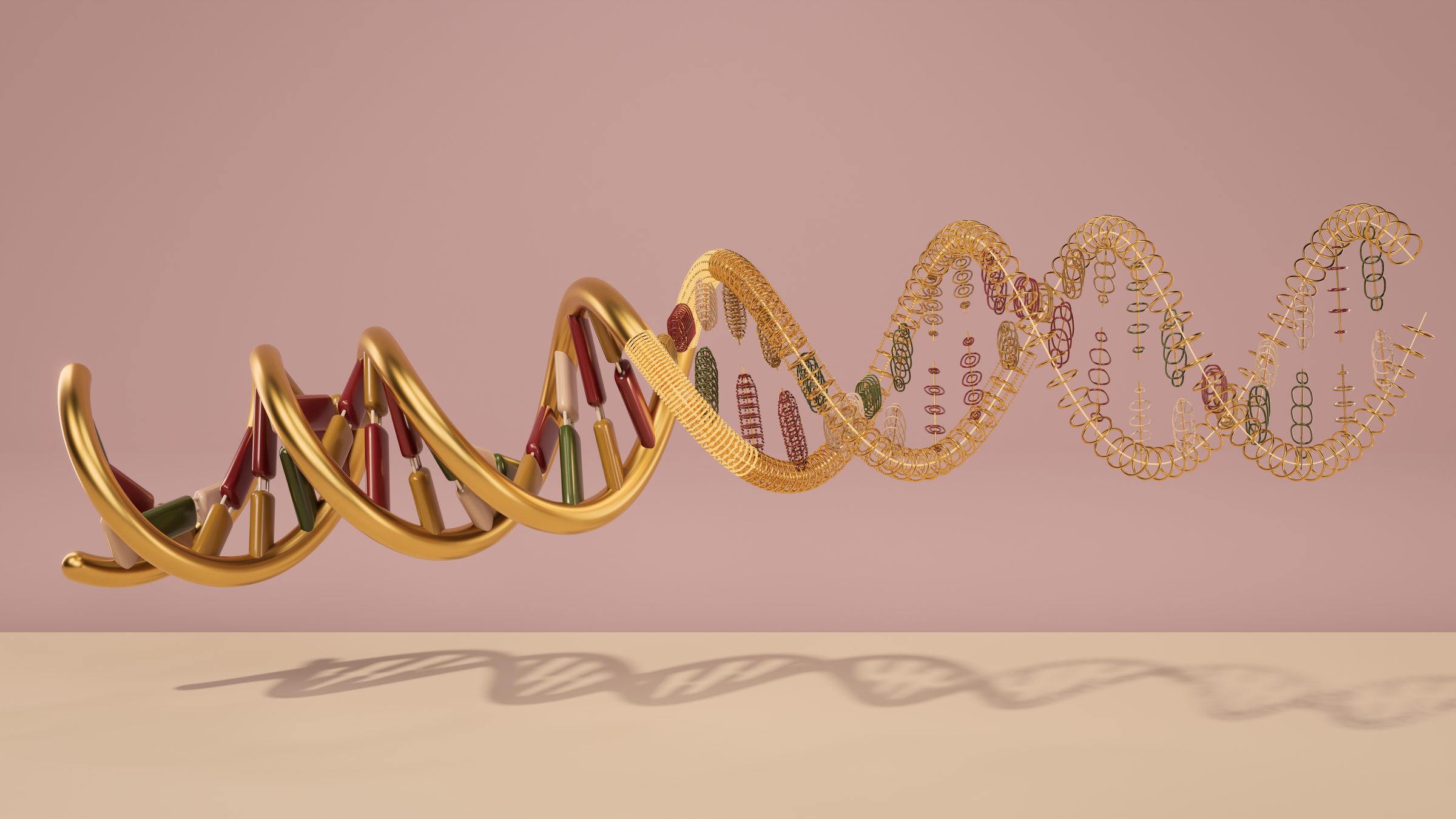
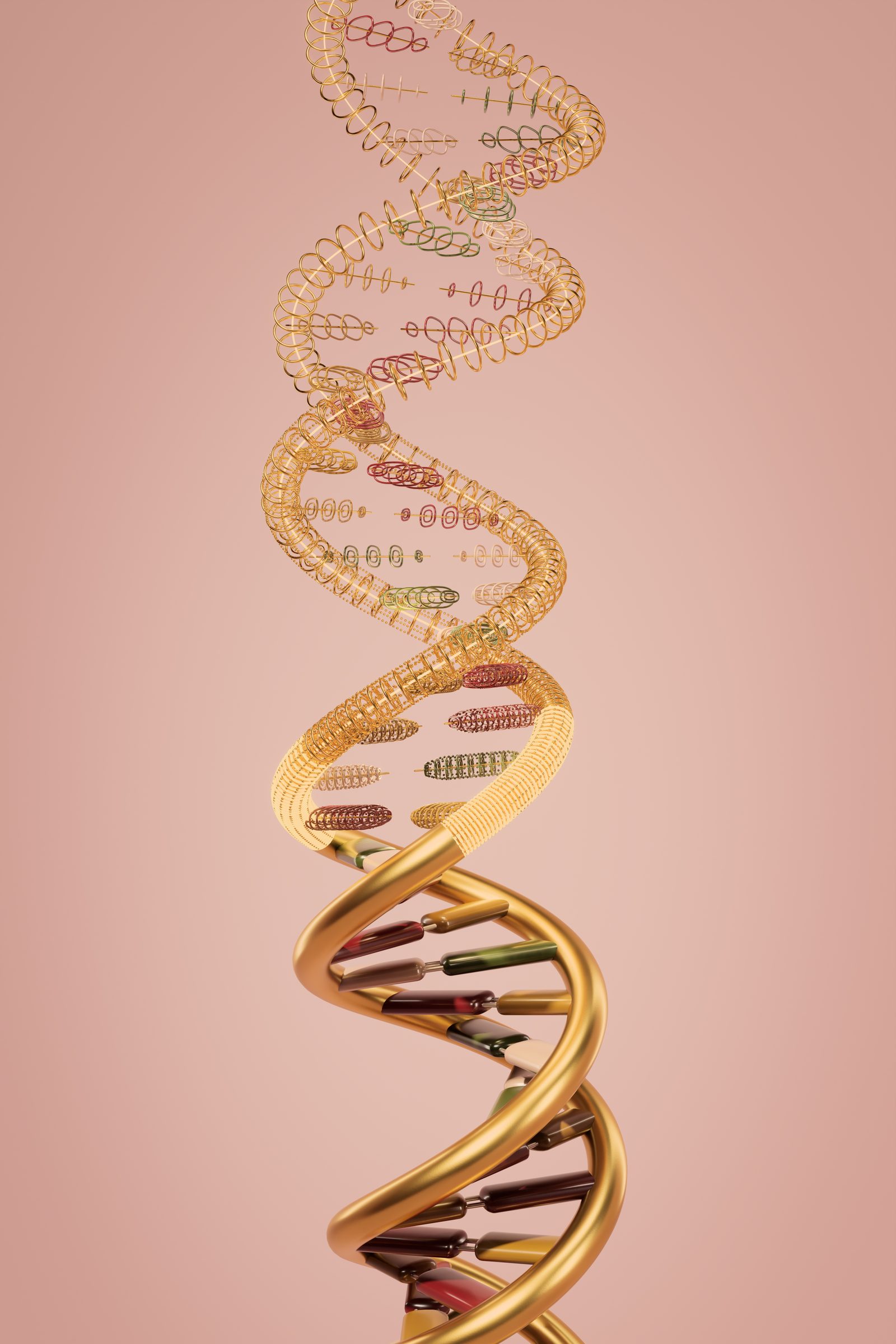
Nobody has ever just looked at DNA: we have always seen it through instruments.
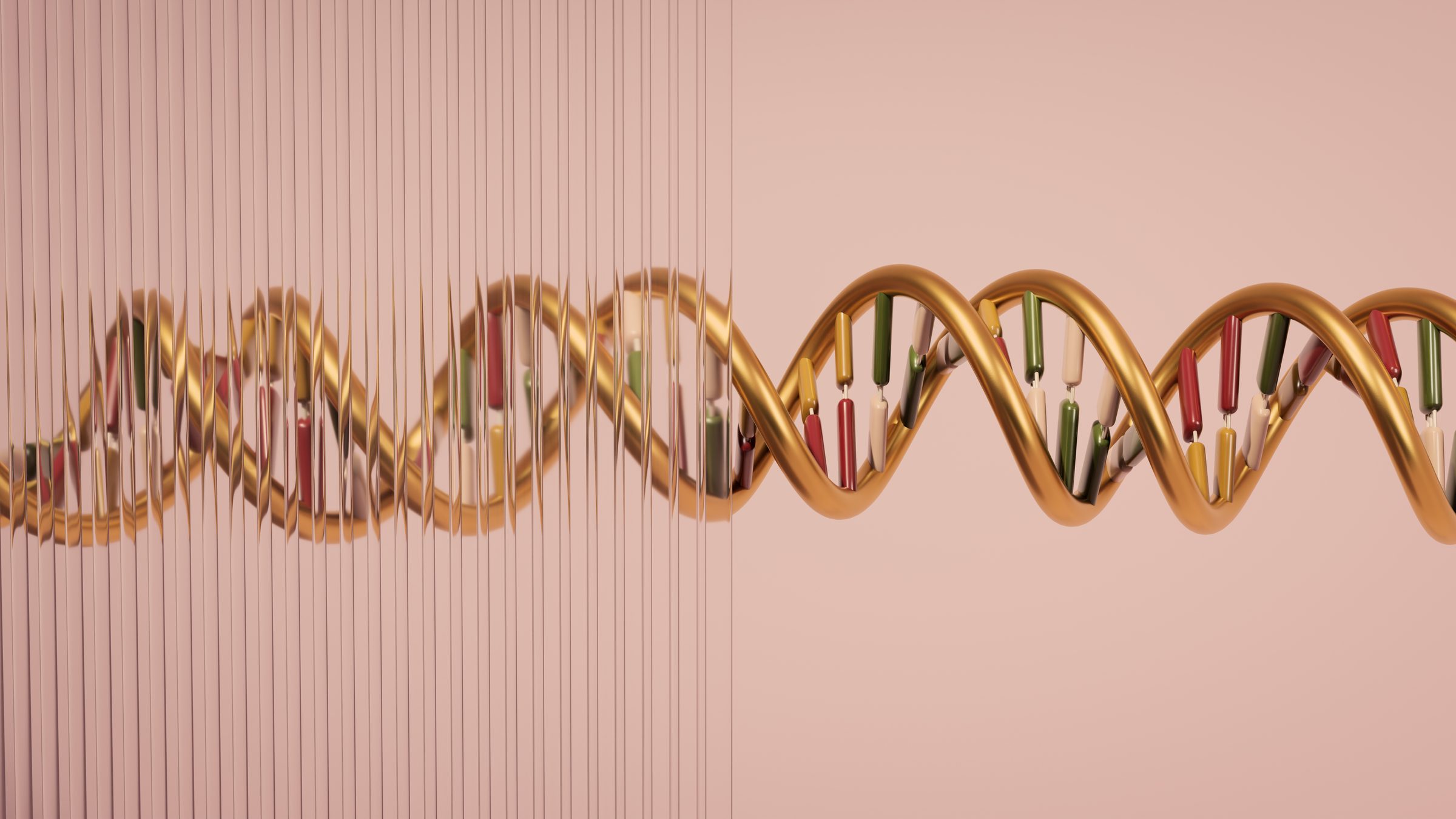
The same DNA can be in two states. Open chromatin is loose and can be read; closed chromatin is tightly packed and stays silent.
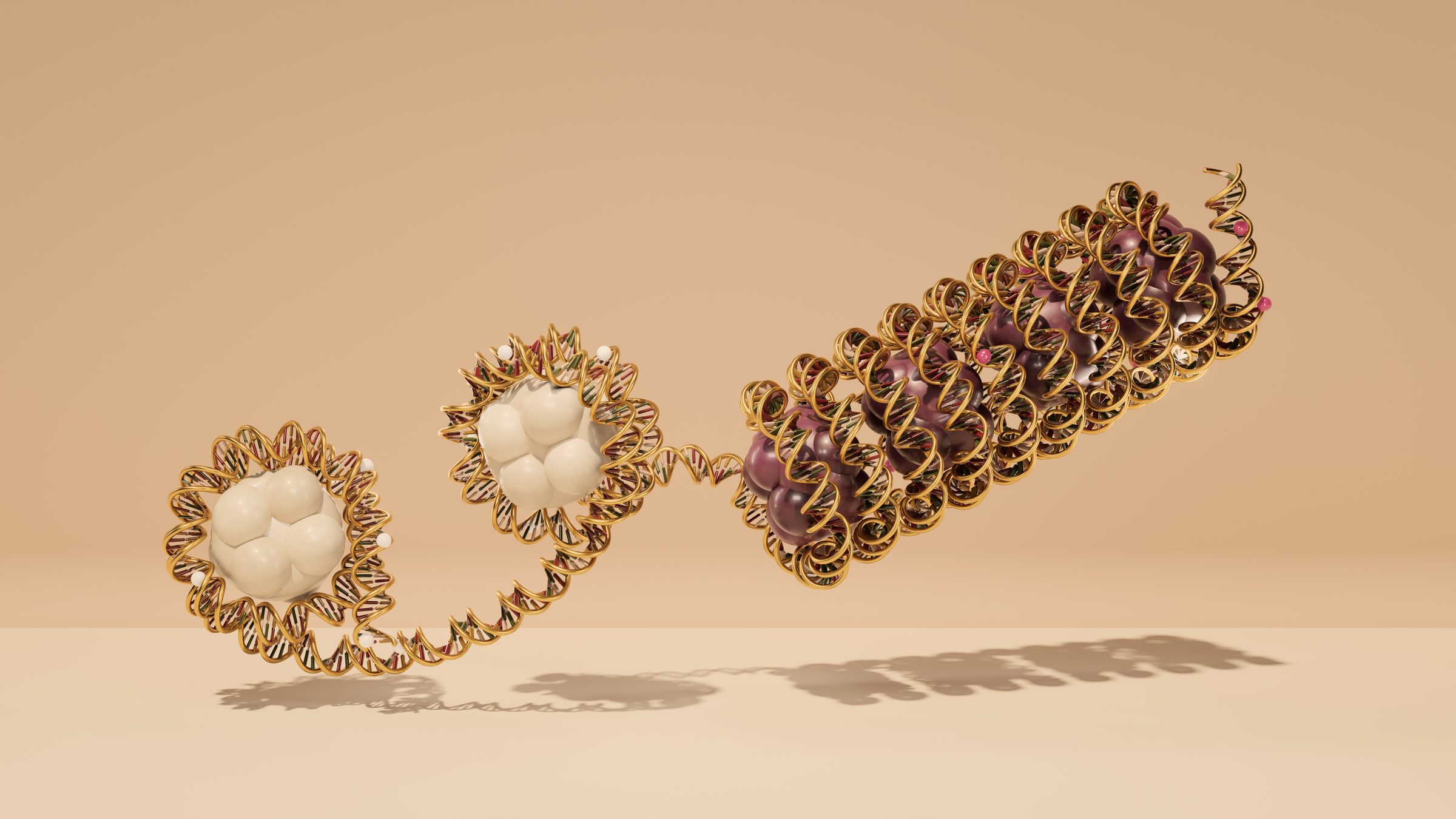
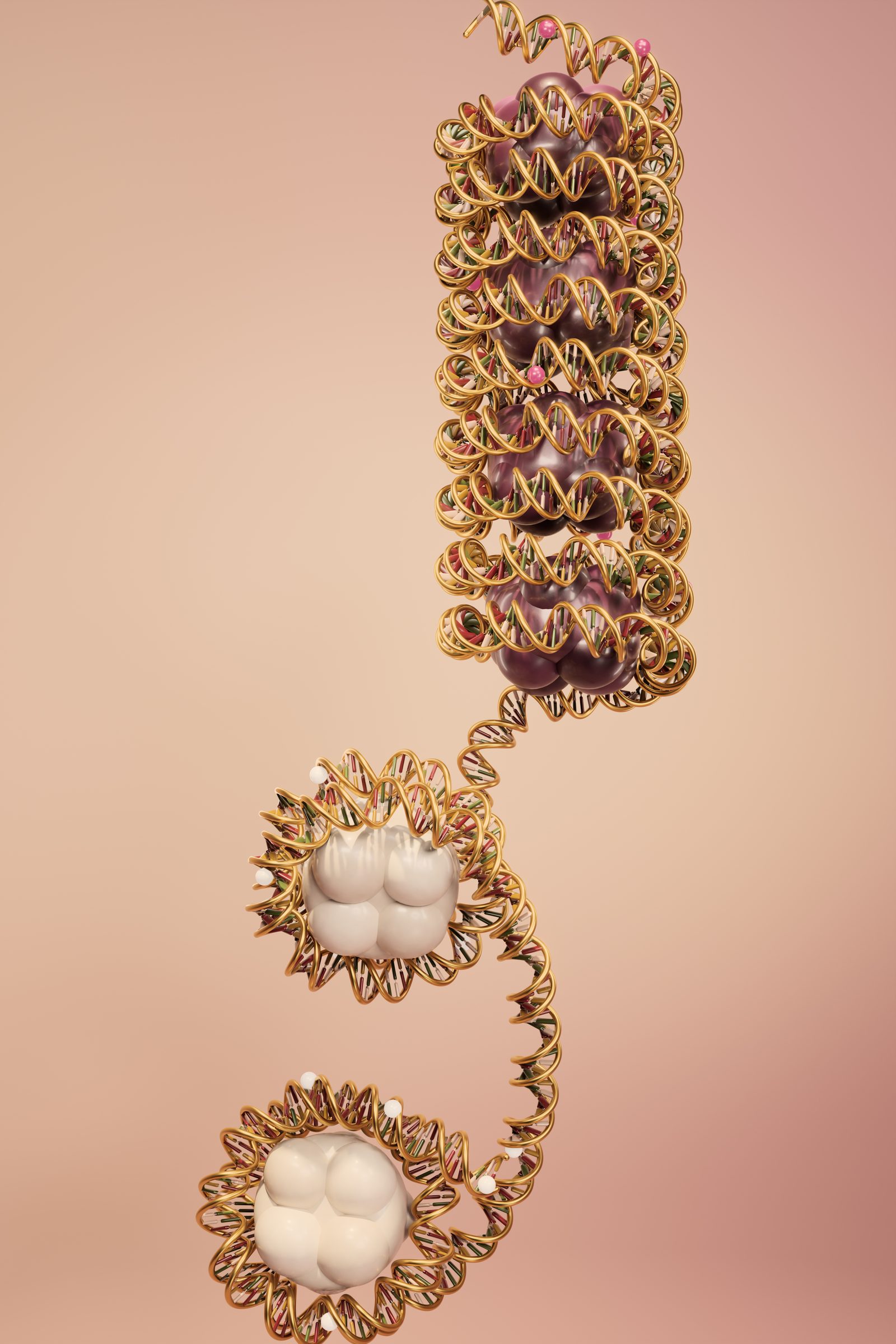
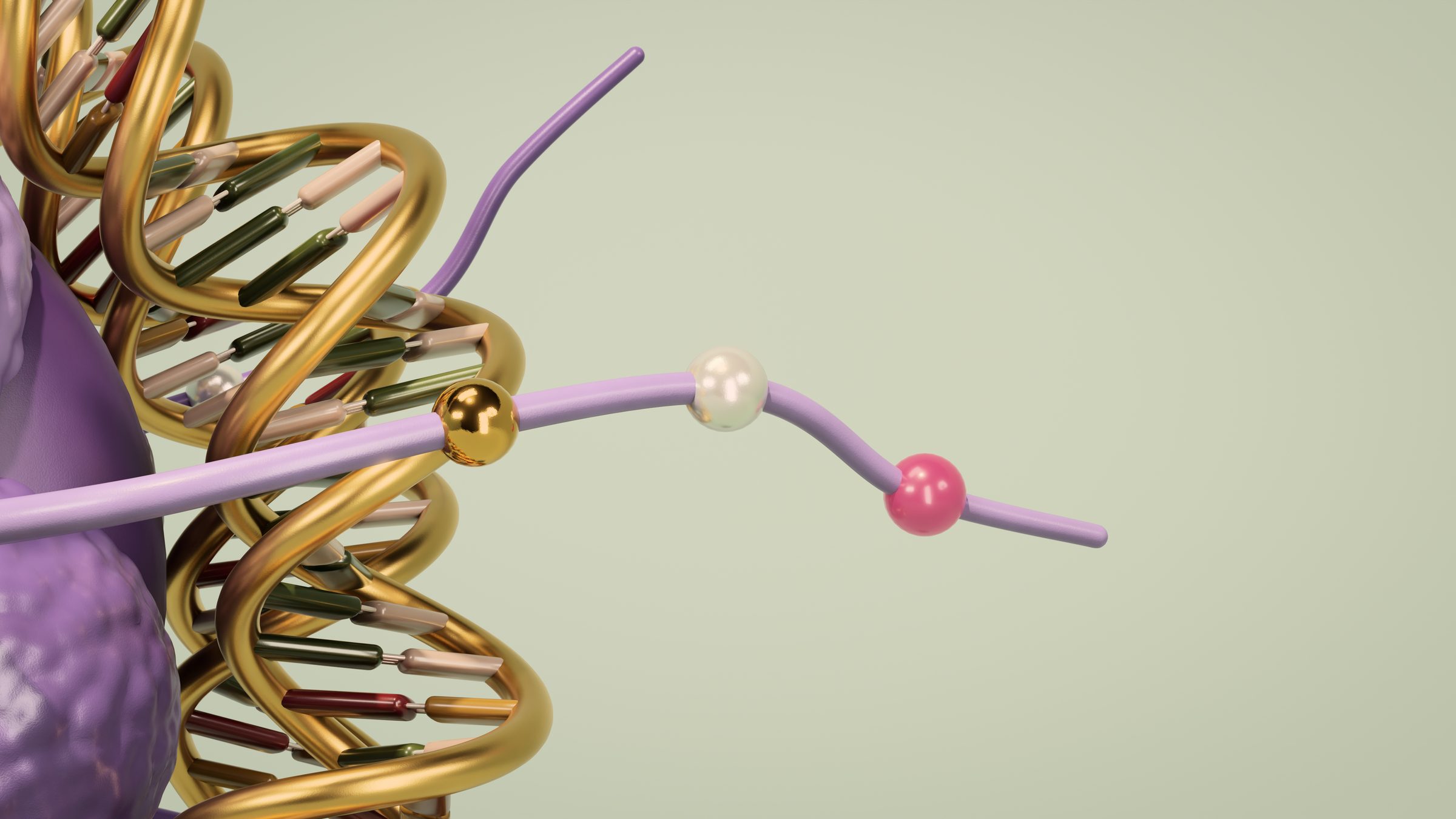
Small chemical marks on the tails of histones work like a code: they tell the cell which genes to switch on and which to keep off.
Work with me
Commissions, collaborations and studio work. Tell me what you’re making and let’s take it to the next level together.
Write to me
hello@gemaalejo.com
Based in Madrid, Spain · Working worldwide